1. Why “1 Ton” Is a Tricky Category
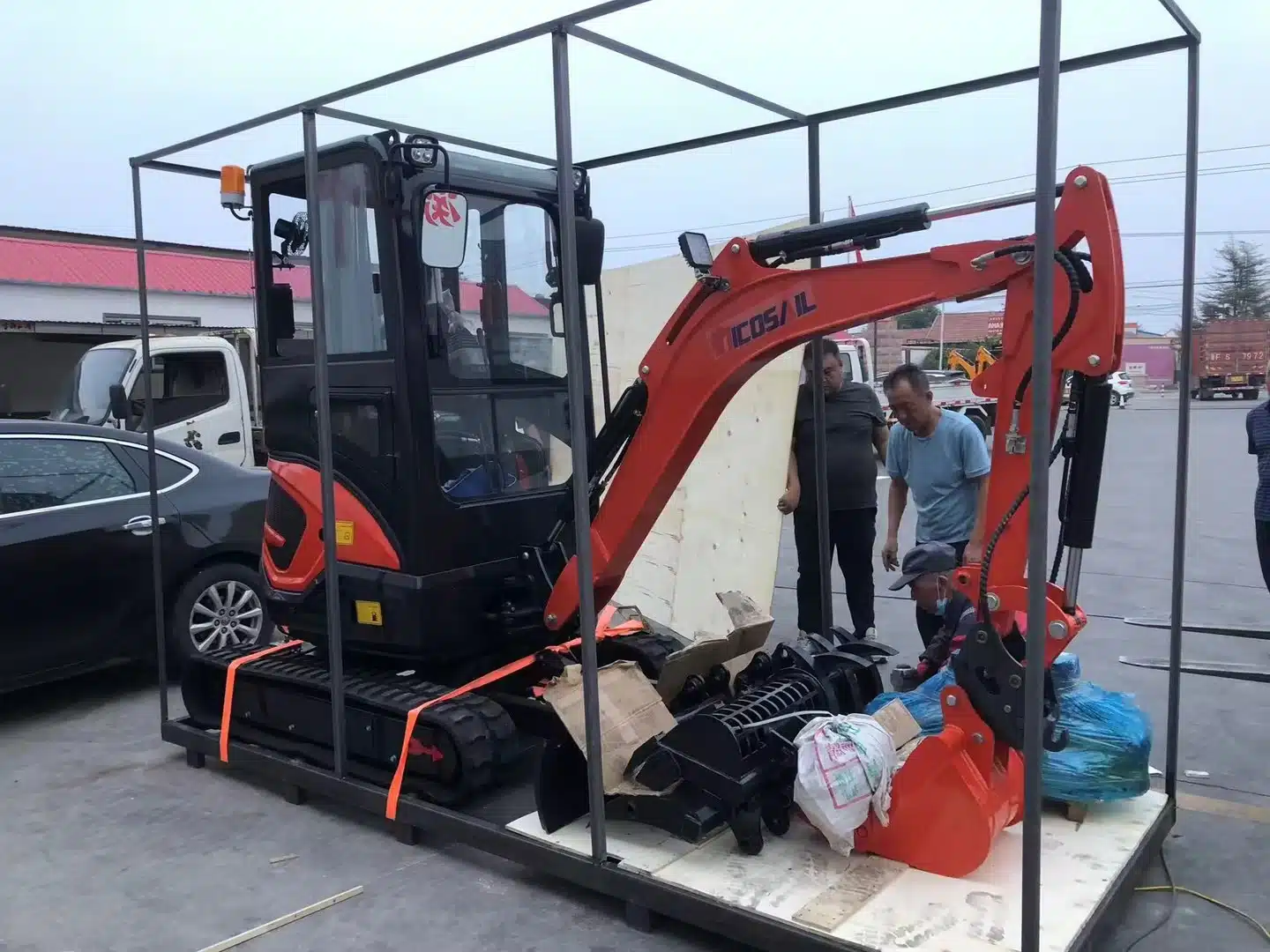
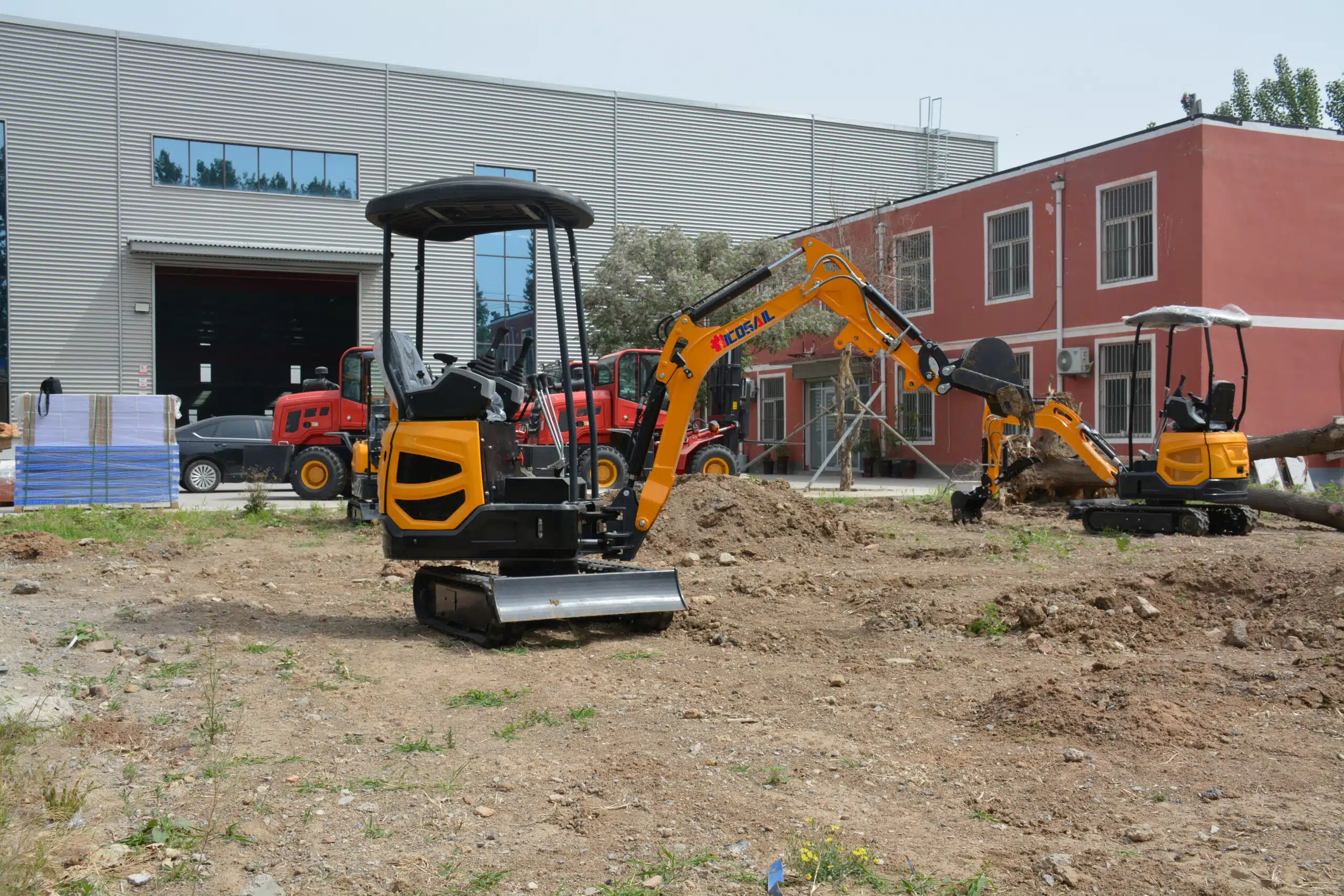
“1 ton mini excavator” sounds simple, but it can mean very different machines.
- Some “1-ton” models are true micro excavators around 0.88–1.08 t (Komatsu PC09-1).
- Some are about 1.05 t and built for tighter professional jobs (Kubota K008-5 is listed around 1 ton class with 2315 lb / 1050 kg).
- Some are sold as “1 ton” but are closer to 850–900 kg with simpler engines and simpler hydraulics (common in many Chinese micro models, like XN10 specs around 850–900 kg in listings).
So before comparing “China vs Japan,” it helps to compare apples to apples:
- same operating weight,
- same digging depth,
- same pump type (gear vs piston),
- same track width/stability,
- same certification package for the market.
2. The Big Picture: What Usually Drives the Price Gap
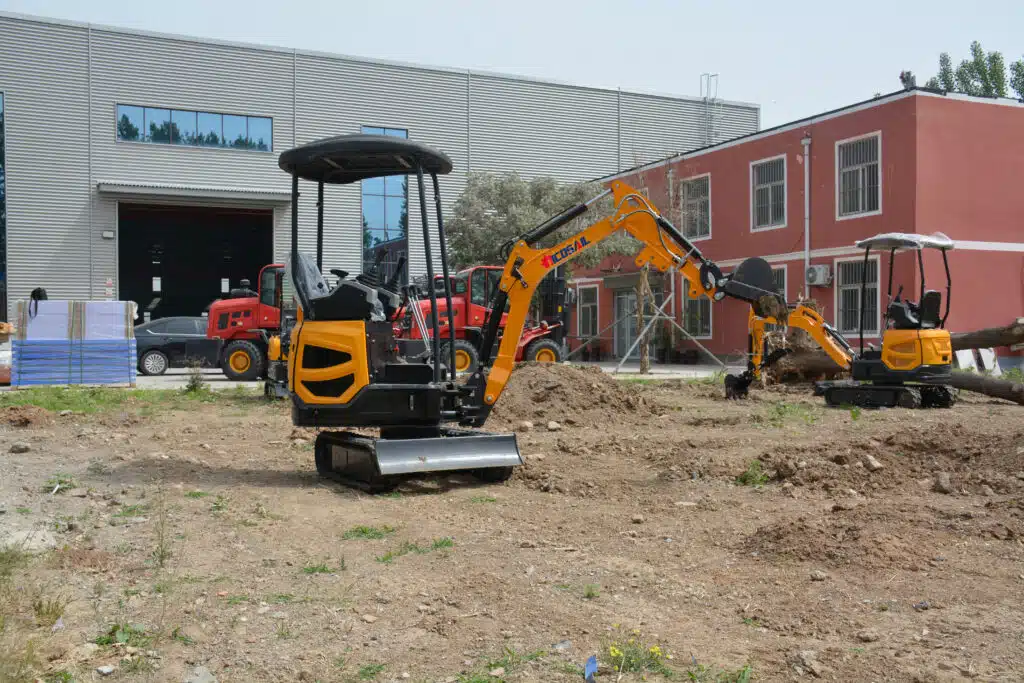
A Japanese-brand 1-ton excavator often costs a lot more upfront. Example pricing signals (just to show the order of magnitude):
- New Kubota K008-5 listings in the US often show pricing in the mid-$20k range (varies by dealer/region/options).
- Used K008-5 listings still hold strong numbers (Machinery Pete shows used K008-5 ranges around $17,995–$19,995 in their dataset).
- “Budget” 1-ton machines sold through non-OEM channels can be single-digit thousands in some markets (example: an AGT “1 Ton” listing shows ~$6,471 on their site at the time of capture).
That price gap usually comes from five buckets:
1) Design maturity (years of iteration)
Japanese OEMs (Kubota/Yanmar/Komatsu/Takeuchi) refine the same platform for many years: little changes, fewer surprises.
2) Supply chain and component consistency
Same valve block supplier, same hose spec, same steel grade, same cylinder seal kit—batch after batch.
3) Quality control (QC) depth
Not just “final test,” but checks during welding, machining, assembly, and hydraulic cleanliness control.
4) Certification + documentation
Compliance and traceability cost money (and time). More on this later.
5) Dealer network and parts logistics
A big reason for the premium is the support system, not just the machine. Kubota, for example, highlights a wide US dealer footprint (over 1100 dealerships in the USA on their dealer locator page).
3. Real Differences You Can Feel in Daily Work
3.1 Hydraulics: smoothness, speed, and “combined movements”
If a buyer tests two machines for 10 minutes, the biggest “feel” difference is usually hydraulics.
Japanese brands often deliver:
- smoother feathering (easy to do tiny movements),
- more stable boom/stick coordination,
- less “jerk” when doing combined actions (boom up + swing + curl),
- better consistency hot vs cold.
A good example of what Japanese brands emphasize: Yanmar even markets that their ViO10-2A uses axial piston pumps and talks about maintaining performance in hot climates with cooling and hydraulic design.
Many budget 1-ton Chinese machines:
- commonly use simpler pump layouts (often gear pump setups in this class),
- can feel “on/off” in controls,
- may lose speed when oil gets hot if cooling or flow matching is basic.
Important twist: This is not “China can’t do it.” China can absolutely build smooth hydraulics—if the factory chooses higher-spec pumps/valves and does the tuning. The market simply has a lot of ultra-budget configurations that prioritize low purchase price over refined control feel.
What to ask a supplier (simple version):
- What pump type is used (gear or piston)?
- What’s total hydraulic flow?
- Is there a real hydraulic oil cooler, and how is it mounted/airflow managed?
(If the supplier can’t answer these clearly, that’s already a signal.)
3.2 Steel, welding, and fatigue life: the stuff you don’t see
In 1-ton machines, the boom and arm look small, but they still see:
- repeated shock loads (bucket hits rock/root),
- twisting loads (side digging),
- vibration (travel on uneven ground).
Japanese brands usually win on:
- consistent weld quality at high-stress joints,
- better fixture control (parts don’t “pull” during welding),
- better pin/bushing fit consistency (less slop developing early).
Where many low-cost machines lose:
- weld toe shape and undercut control,
- inconsistent bushing hardness/fit,
- paint over poor surface prep (looks fine for 3 months, then corrosion starts).
The practical takeaway:
If the plan is to run a machine hard (rental, daily contracting), fatigue life matters. If it’s light use (a few weekends a month), the “premium life” may not be fully utilized.
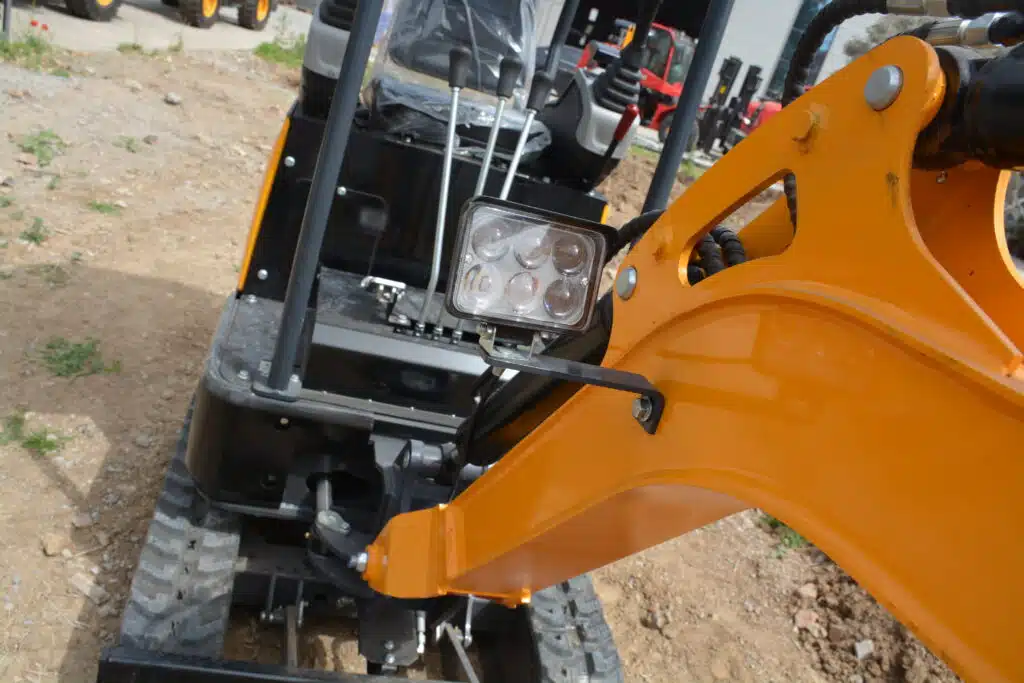
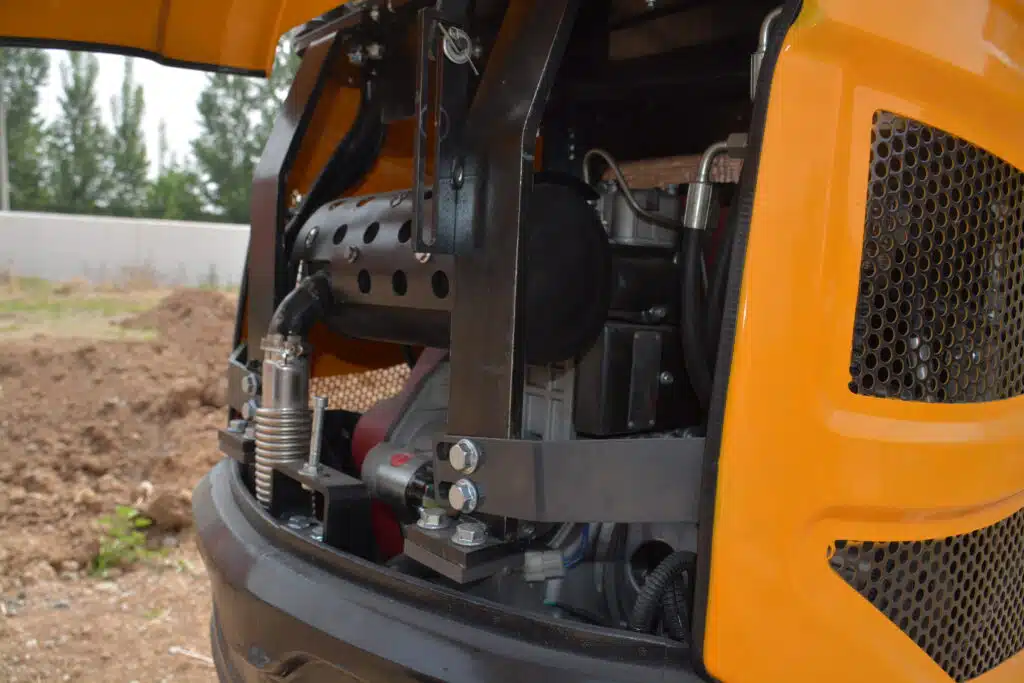
3.3 Leaks and hose routing: the most common complaint category
Ask any fleet manager what annoys them most and you’ll hear some version of:
- small hydraulic leaks,
- hose rubbing,
- fittings loosening,
- seepage around cylinder seals.
This is where the “invisible reliability” lives.
Japanese brands usually invest more in:
- hose routing that avoids pinch/rub points,
- clamps and guards where hoses move,
- stable fittings and consistent torque processes.
Many budget micro excavators are built to a price, so:
- hoses may be routed “shortest path,”
- fewer clamps,
- more exposure near the boom foot or swing area,
- more vibration impact.
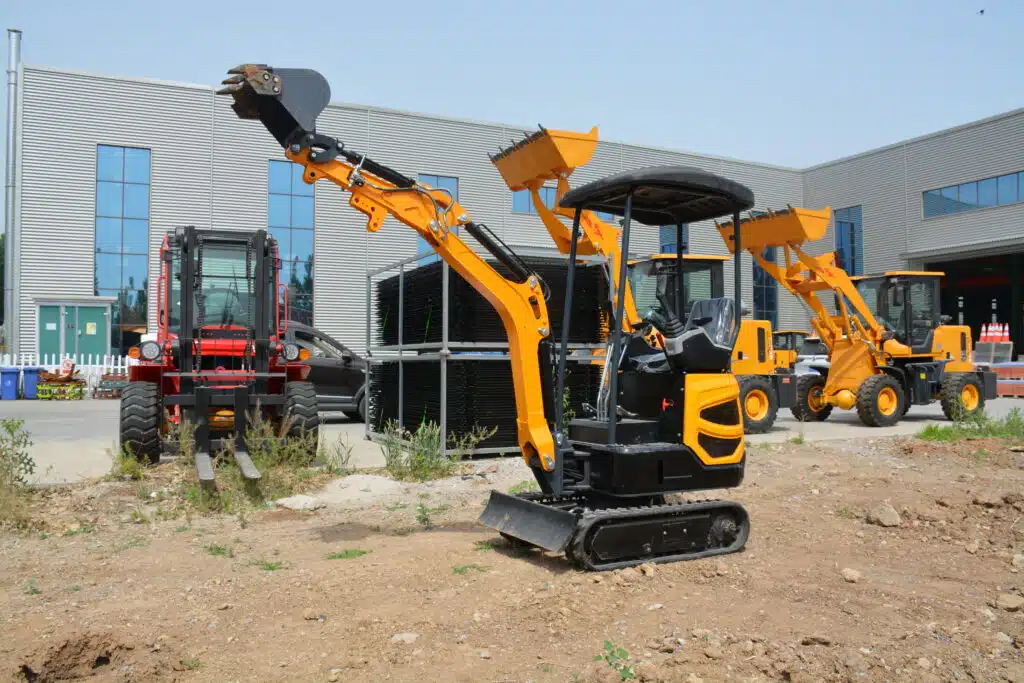
Easy inspection trick (works in a video too):
- Ask for a slow walk-around video focusing on: boom base area, swing area, and undercarriage hose routing.
- Look for hoses touching metal edges or moving parts.
3.4 Undercarriage and travel system: stability vs “doorway width”
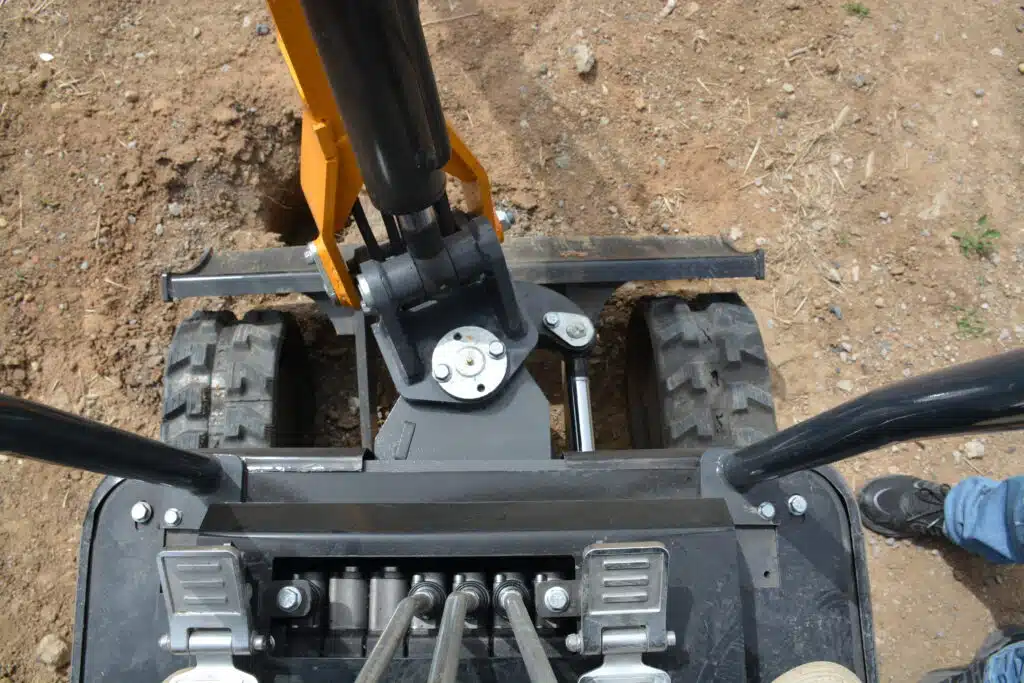
Micro excavators love narrow access, but narrow tracks reduce stability.
Kubota K008-5 highlights an adjustable track gauge down to 700 mm and up to 860 mm for stability (Kubota EU page describes that widening can increase stability).
Many Chinese 1-ton machines also offer expanding tracks. But the “real difference” is often:
- track frame rigidity,
- roller/idler quality,
- track rubber compound,
- travel motor durability.
In the 1-ton class, a slightly better undercarriage can mean:
- less track derailment,
- longer roller life,
- fewer customer complaints.
3.5 Controls, ergonomics, and safety: small machine, big impact
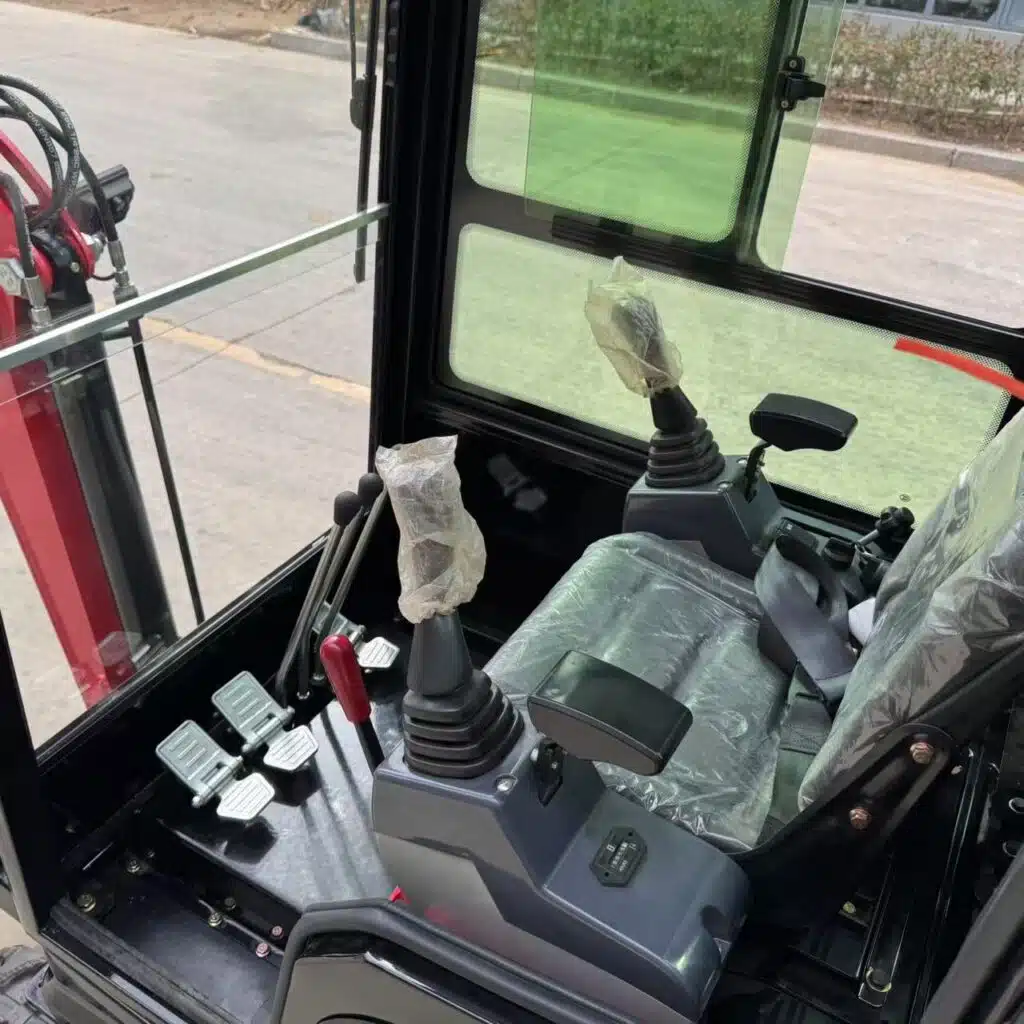
Japanese brands tend to deliver a more “finished” operator station:
- better lever feel,
- smoother joystick response,
- less vibration through the seat/controls,
- clearer labels and safer layouts.
Also, market compliance matters. If the machine is going into the EU/UK/NA, safety expectations are higher (guarding, decals, operator presence logic depending on configuration, etc.). This ties directly to certification, which is where many buyers get burned.
4. Certification: Where Buyers Get Burned
This is a huge “real difference” category—especially for importers and distributors.
4.1 EU Stage V / US EPA Tier 4: the rules are real
The EU has a formal type-approval framework for non-road mobile machinery (NRMM) engines and emissions limits.
In the US, EPA regulates nonroad diesel engines used in equipment like excavators.
Here’s the detail that matters in the 1-ton class:
- Many 1-ton machines run under 19 kW, and rules/thresholds often treat power bands differently. Industry explanations commonly reference the 19 kW threshold as a key line (for example, Takeuchi discusses manufacturers staying under 25.4 hp / 19 kW to avoid aftertreatment complexity on some sizes).
- But “under 19 kW” does not automatically mean “no compliance needed.” It means the compliance path and hardware may differ, and documentation still matters.
4.2 Common problems seen with cheap imports
- paperwork that doesn’t match the engine plate,
- CE docs that look “generic,” not specific to the serial number,
- missing test reports or unclear issuing bodies,
- sellers mixing terms like “EPA” / “Euro 5” without showing real proof.
4.3 How to verify without becoming a legal expert
For B2B importers/distributors, a simple verification routine helps:
Ask for:
- machine nameplate photo (with serial number),
- engine nameplate photo (model + power),
- certificate copies that clearly match that engine family/model,
- a packing list/serial number list for the shipment (so docs match physical units).
Red flags:
- supplier refuses plate photos,
- certificate has no traceable number,
- same certificate used for “all models.”
5. Parts & Service: The Hidden Half of the Machine
A mini excavator is not “one purchase.” It’s a parts and downtime story.
5.1 Japanese brand advantage: predictable support
Kubota emphasizes strong parts availability through its dealer system and genuine parts pipeline.
Kubota’s dealer locator indicates a very large dealership footprint in the US.
This usually translates to:
- faster filters/seals/undercarriage delivery,
- known service procedures,
- resale buyers feeling confident.
5.2 Chinese machine reality: support depends on the exporter, not the country
There are two completely different “China excavator experiences”:
Experience A (bad):
- seller disappears after payment,
- no spare parts list,
- different suppliers for valves/cylinders month to month,
- parts don’t interchange.
Experience B (good):
- factory keeps a stable BOM,
- provides a recommended spare parts kit,
- supports with videos and troubleshooting,
- offers consistent documentation and serial tracking.
This is where it’s smart to choose a factory-exporter with a real system—not just the lowest quote.
6. Resale Value and Total Cost of Ownership (TCO)
The biggest misunderstanding is thinking the “real difference” is only build quality.
For many buyers, the real difference is: what it costs per hour after resale and downtime.
6.1 Resale: Japanese brands often keep value
Used market listings show strong retention for Japanese brands. For example:
- Kubota K008 machines appear across marketplaces with wide price ranges, but still hold meaningful value even used.
- Machinery Pete’s snapshot for used K008-5 shows pricing around $17,995–$19,995 in their dataset.
A buyer paying $25k–$30k for a Japanese-brand micro excavator may later recover a decent chunk of that money.
6.2 Downtime: the silent cost
One hydraulic hose rubbing through at a jobsite can easily cost:
- a service call,
- a lost day,
- angry customers (especially in rental).
Japanese brands tend to reduce the frequency of “small failures.”
Chinese machines vary widely: some are solid, some are “good until the first season ends.”
6.3 A simple TCO thought experiment
- If the machine is for professional daily work, downtime + resale usually push the decision toward Japanese brands.
- If the machine is for light duty and the buyer can handle basic maintenance, a well-chosen Chinese machine can be a smart value.
7. Who Should Buy Chinese vs Japanese in the 1-Ton Class
Choose a Japanese brand if:
- the machine is going into a rental fleet,
- downtime is expensive,
- strong resale value is important,
- the buyer wants dealer support and predictable parts,
- certification and liability risk must be minimal.
Examples of Japanese 1-ton/micro references:
- Kubota K008-5 (around 1-ton class, ~1050 kg).
- Yanmar ViO10-2A (listed operating weight about 1225 kg and highlights advanced hydraulic design).
- Komatsu PC09-1 (operating weight range 0.88–1.08 t).
Choose a Chinese 1-ton machine if:
- the budget is tight but the buyer still wants tracked digging ability,
- it’s light usage (farm, landscaping, occasional contracting),
- the buyer is willing to learn basic maintenance,
- the supplier is proven and provides parts support and documentation.
Key point: The decision is not “China vs Japan.” It’s “Which supplier system is being bought?”
8. A Practical Buying Checklist (Questions to Ask Any Supplier)
These questions quickly separate “good supplier” from “cheap box mover.”
Machine configuration
- What is the operating weight with canopy and standard bucket?
- What is the track width range (retracted/extended)?
- What is the max digging depth?
Hydraulics
- Pump type: gear or piston?
- Total hydraulic flow?
- Is there an oil cooler? How is it cooled (airflow path)?
Reliability basics
- Are hoses clamped and protected at the boom base?
- What seal brand is used in cylinders? (Even a simple answer is better than silence.)
- What is the warranty scope (hydraulic pump/valve/travel motor)?
Certification & documentation
- Plate photos (machine + engine)
- Certificates matching engine family/model
- Serial number list on shipping documents
Parts support
- Spare parts kit offer (filters, seal kit, pins/bushings, hoses)
- Parts lead time promise
- Exploded parts manual + part numbers
Pre-shipment inspection (PSI)
- Can the supplier provide:
- running video (cold start + full function test),
- hydraulic pressure test screenshot/photo,
- packing photos with serial number visible?
9. Where Nicosail Fits
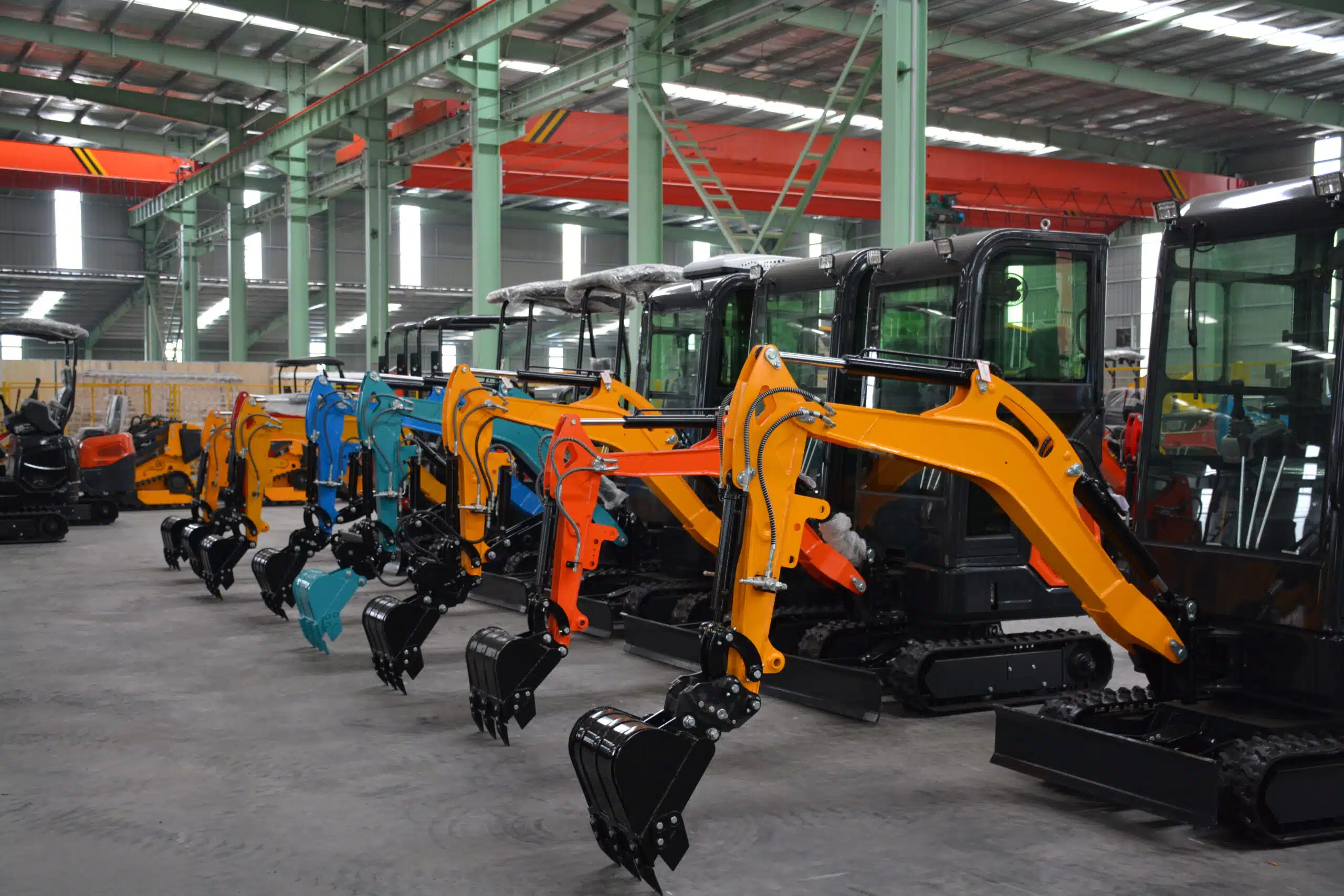
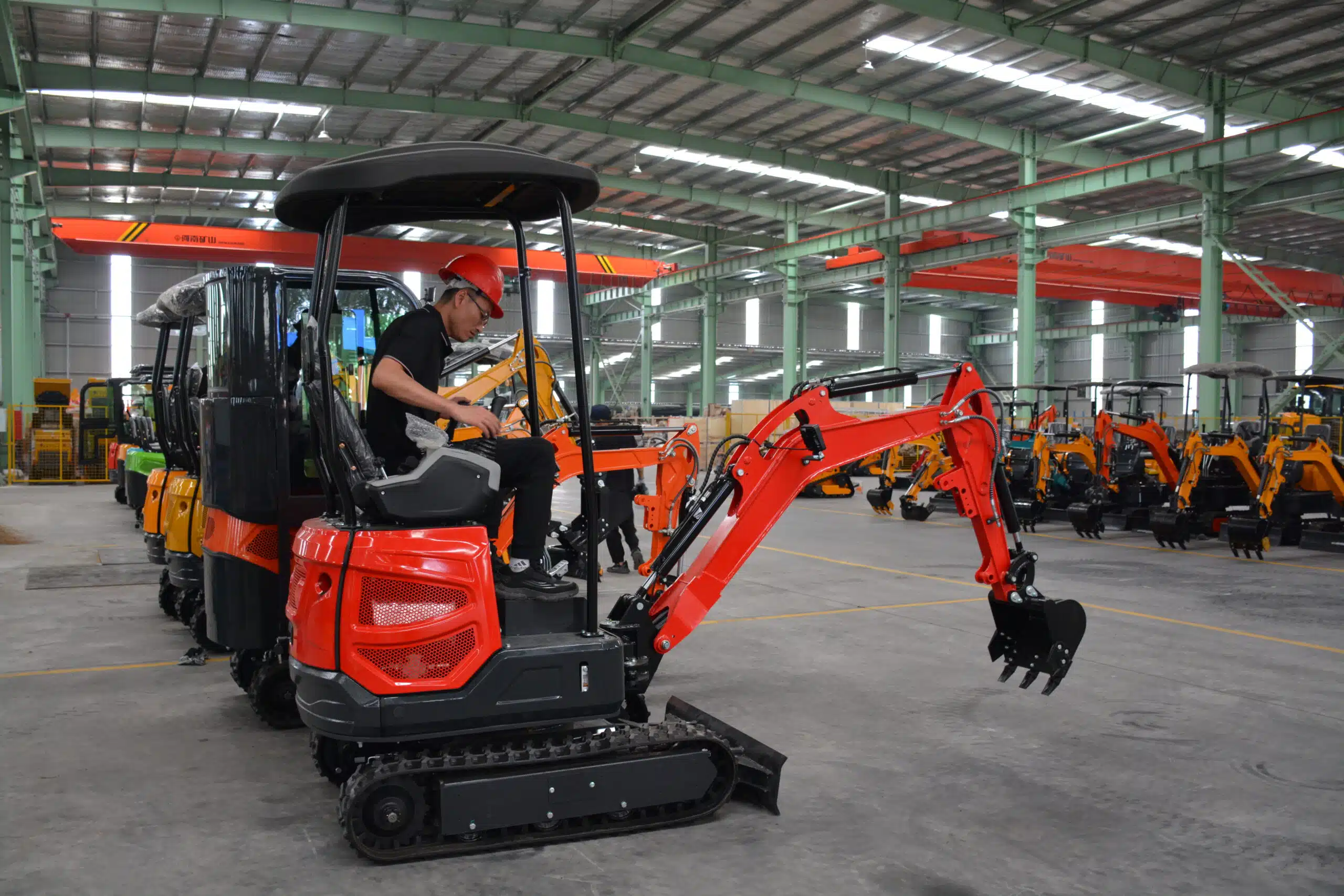
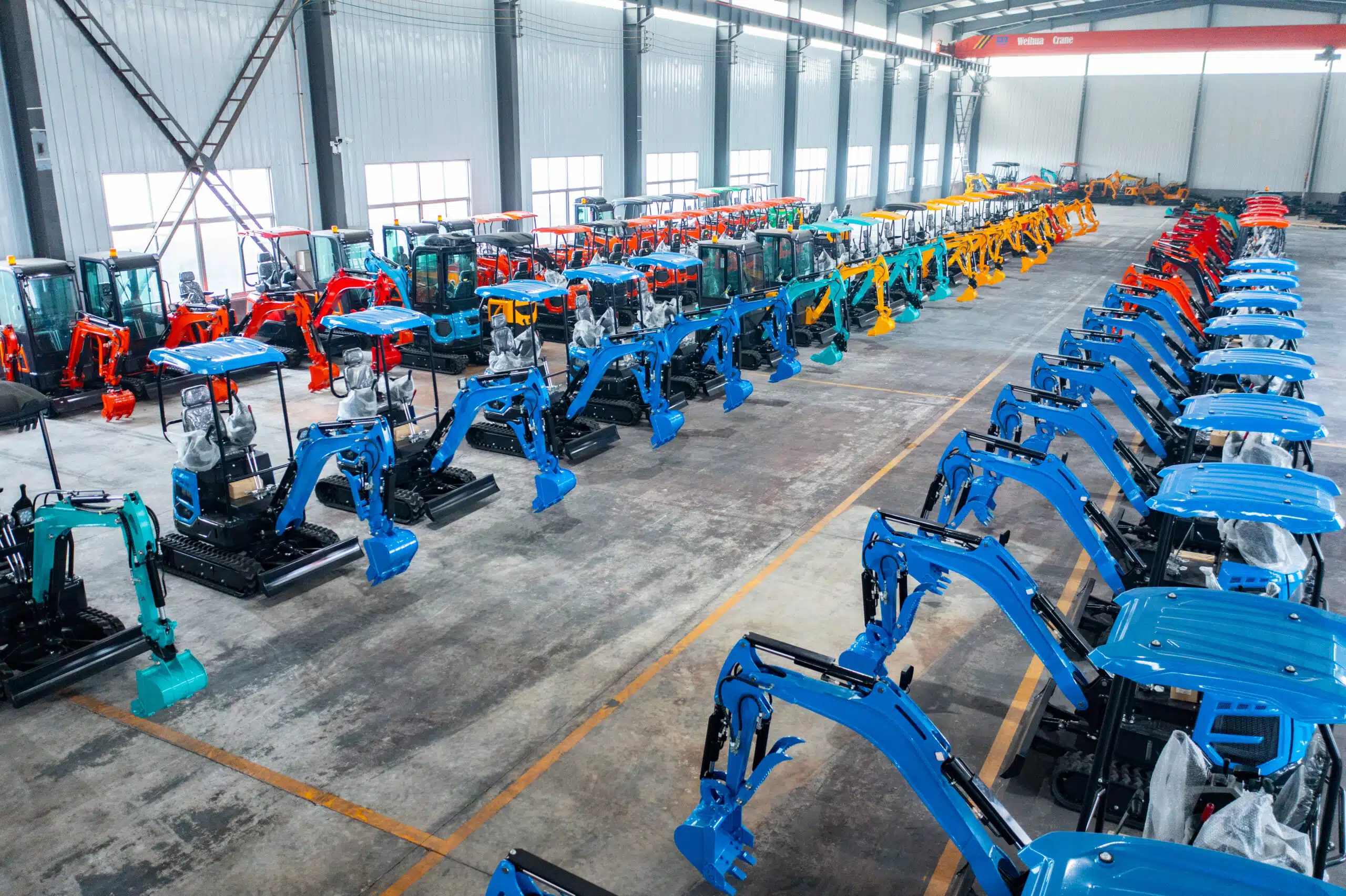
For buyers who want the “China value” without the common China headaches, the best path is choosing a factory that behaves like an OEM supplier: stable configuration, consistent QC, documentation discipline, and real parts support.
Nicosail is positioned for that kind of buyer:
- it’s a factory exporter (not just a trading desk),
- supports B2B needs like customization and batch consistency,
- focuses on export markets where certification and documentation matter (Europe/North America/Australia).
A smart approach is to treat Nicosail the same way as any serious supplier:
- ask for a full spec sheet,
- request plate photos + compliance documents,
- require a pre-shipment inspection routine,
- confirm spare parts support and lead time in writing.
That keeps the decision objective and protects the buyer—while still benefiting from China’s pricing advantage when the supplier system is solid.
FAQ
1) Are Chinese 1-ton mini excavators “bad quality”?
Not automatically. The market has a lot of ultra-budget builds, so the average experience can be mixed. Quality depends heavily on the factory’s component choices, QC process, and whether parts support is real.
2) Why do Japanese brands feel smoother?
Usually hydraulics + tuning + consistency. Some Japanese models highlight advanced pump setups (Yanmar mentions axial piston pumps on the ViO10-2A).
3) Is the price gap really that big?
Often yes. New Japanese micro excavators can sit in the $20k+ range (example Kubota K008-5 dealer listings in the mid-$20k range).
Budget “1-ton” machines can show up under $10k in some channels.
4) What about emissions rules—will a 1-ton excavator need Tier 4 / Stage V?
Rules depend on market and engine power band. The EU has a formal NRMM emissions framework, and the US EPA regulates nonroad engines.
Many manufacturers pay close attention to the 19 kW threshold discussed in industry explanations.
Always verify the exact engine and documents for the destination country.
5) Which is better for a distributor importing containers?
If the plan is long-term brand building, parts support and documentation matter as much as machine cost. A strong Chinese factory partner (with stable BOM + compliance discipline) can work well. Japanese brands offer easier resale and dealer-level support, but at higher buy-in.
6) What’s the fastest way to avoid certificate fraud?
Require:
- engine plate photo,
- machine plate photo,
- certificates that match that engine family/model,
- serial-number list tied to shipping documents.
If a supplier hesitates, walk away.
7) Is resale value really that different?
Usually yes. Japanese brands typically hold stronger resale. Used K008 family pricing data across marketplaces shows meaningful retained value.
Summary
A “China 1 ton mini excavator vs Japanese brand” comparison is not just about where it’s made.
Japanese brands typically deliver:
- smoother hydraulics,
- tighter build consistency,
- stronger certification confidence,
- bigger parts/service networks,
- better resale value.
Chinese 1-ton machines can deliver excellent value when:
- the supplier controls configuration consistency,
- QC is real (not just a sticker),
- documentation is clean and verifiable,
- parts support is planned, not promised.
The smartest buyers stop debating “China vs Japan” and start asking:
Which machine system is being bought—hardware plus documentation plus parts support?
If the goal is a reliable China-sourced option with export-market discipline, factories like Nicosail are worth evaluating—using the same checklist and verification steps that protect any serious importer.