1. What “delivery time” really means (and why most quotes are wrong)
When someone says “25–35 days to Germany” or “30–40 days to the USA,” they’re usually talking about one slice of the journey—often port-to-port ocean transit, not the full story.
For small excavators, real delivery time is usually:
- Factory ready date (production finished + inspection done)
→ plus export process (booking, packing, port handling, export customs)
→ plus main transport (ocean/rail/air)
→ plus destination process (unloading, import customs, local trucking)
→ plus the surprises (weather, rolled bookings, inspections, missing documents)
That’s why two buyers can both “ship from China,” but one receives in 45 days and the other in 85 days—even with the same carrier.
2. The simple lead-time formula that works for excavators
Use this every time:
Total Delivery Time = A + B + C + D + E
Where:
- A — Production & “Ready-to-Ship” time
Assembly + testing + paint cure + final inspection + any rework - B — Origin logistics time (China side)
Crating/packing + inland trucking to port + export clearance + port waiting - C — Main transport time
Ocean / rail / air (and any transshipment) - D — Destination logistics time (your side)
Unloading + import customs + duties/VAT + local trucking to your yard - E — Risk buffer
A realistic buffer based on season, route, and documentation complexity
If any quote doesn’t clearly show A–E, it’s not a delivery plan—it’s a guess.
3. Step-by-step: build a reliable timeline (with checkpoints)
Step 1: Start with the date you must have the excavators
Work backward from your “must-arrive-by” date (peak season, rental start, project mobilization, dealer launch).
Step 2: Lock the Ready-to-Ship (RTS) date in writing
RTS is not “production finished.” It should mean:
- machine assembled
- test run completed
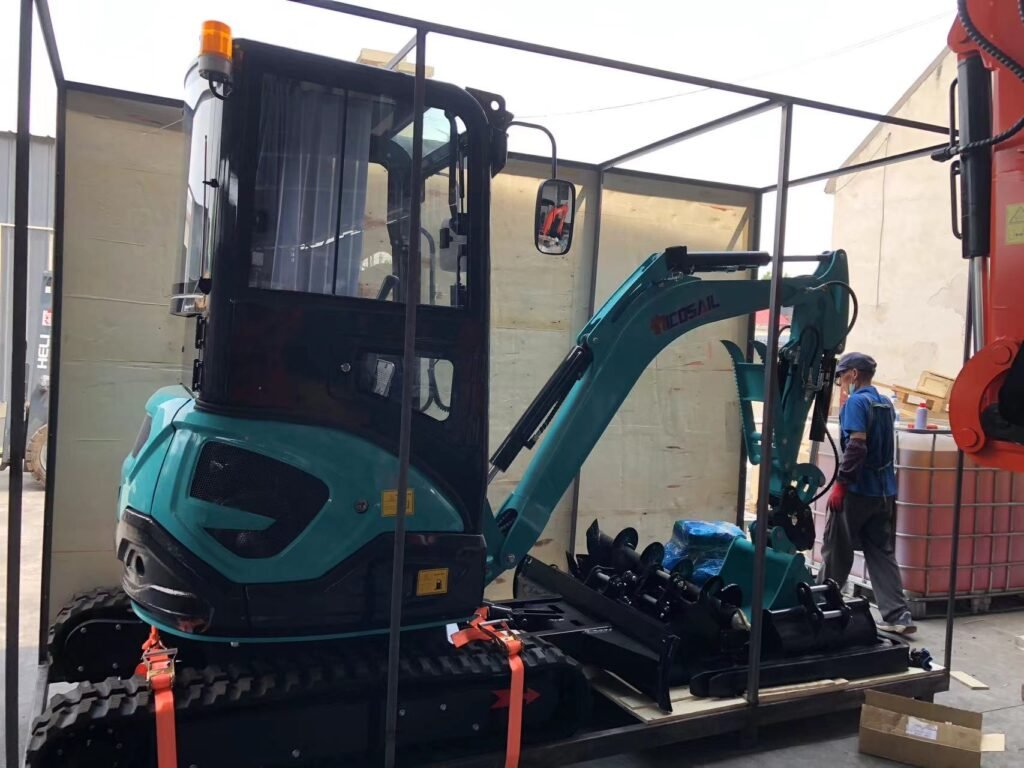
- photos/video of serial number & running test
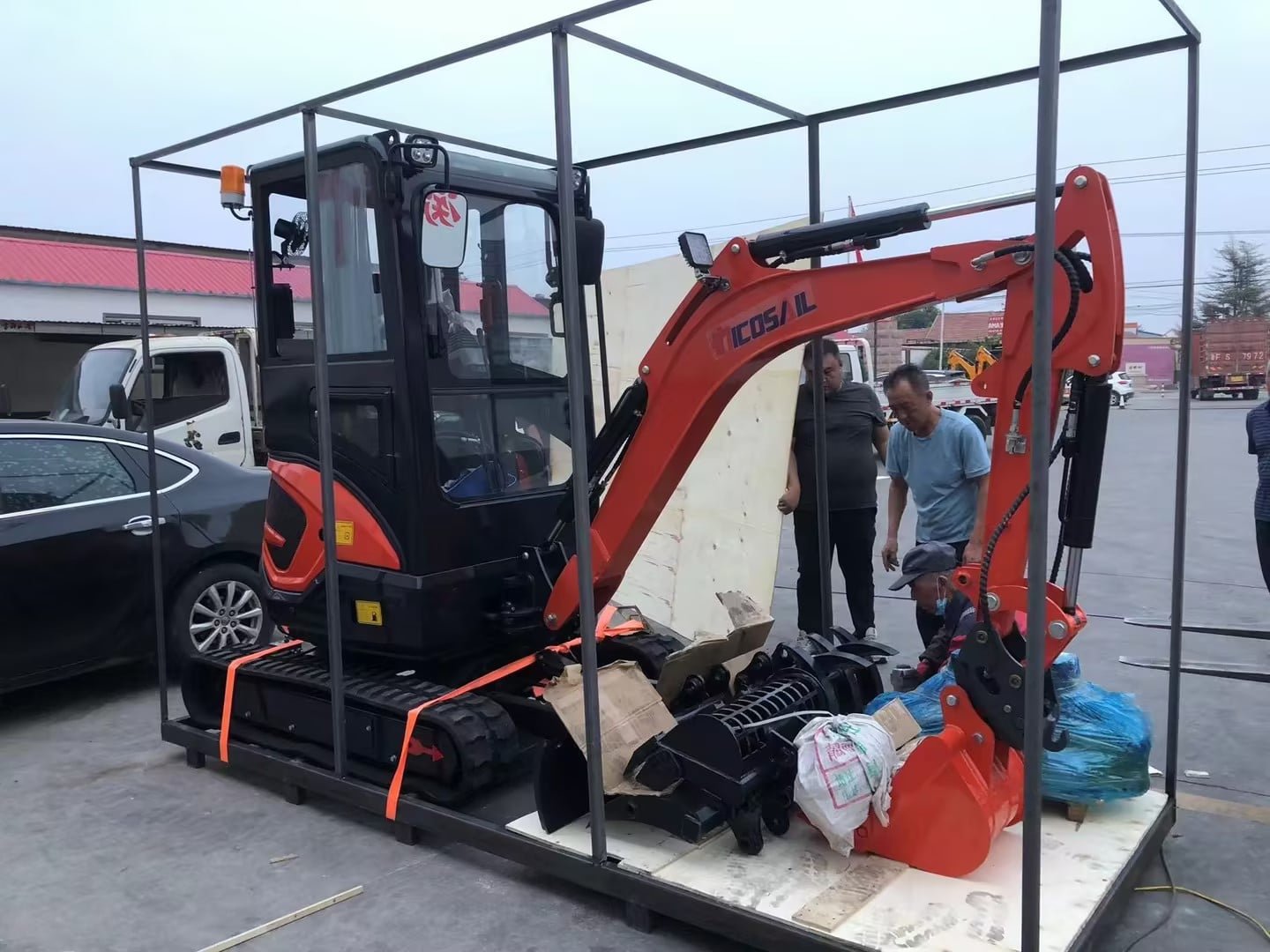
- packing plan confirmed
- documents ready (or at least draft-ready)
This single definition prevents 80% of schedule fights.
Step 3: Split the journey into milestones (so delays are visible early)
A clean milestone list:
- PO confirmed + deposit received
- Production start
- Pre-shipment inspection (PSI) window
- RTS date
- Booking confirmed (vessel/rail flight confirmed)
- Gate-in at port / rail terminal
- ETD (depart China)
- ETA port/terminal
- Customs released
- Delivered to yard
If a supplier can’t follow this structure, that’s a warning sign.
Step 4: Use tracking data that reflects reality, not brochure transit times
Ocean schedules change weekly. Timeliness indicators and forwarder metrics often show that actual transit can drift. For example, Flexport’s Ocean Timeliness Indicator has recently reported China-to-U.S. West Coast transit around the low 30-day range and China-to-U.S. East Coast longer (mid–high 50s) in early January 2026.
Use this kind of data as a “reality check” for whatever ETA you’re being promised.
4. Shipping mode choices and what they do to the clock
Ocean freight (most common for excavators)
- Lowest cost per unit
- Biggest variability (rolling, port congestion, route disruptions)
- Often the fastest cost-effective choice, but not the most predictable
Rules of thumb for general China→USA shipping often land around 30–40 days for ocean freight as a broad lead-time estimate (not including every possible delay).
Rail (mainly China→Europe, when it fits your cargo and compliance needs)
- Much faster than ocean in many lanes
- More predictable in some seasons
- But has constraints (routing, sanctions/compliance, terminal capacity, container availability)
Many logistics references commonly describe China→Europe rail in the ~12–20 day range for terminal-to-terminal movement (varies by route and border conditions).
Air freight (only for parts, attachments, or emergency deliveries)
- Fastest, but expensive
- Often impractical for whole excavators due to weight/size and cost
- Useful for urgent spare parts, quick-couplers, small attachments
Freight guides often place air freight in the about-a-week range (depending on service level).
5. Container vs flat rack vs RoRo: which one changes your ETA most
Option A: Container (20GP / 40HQ)
Best for: very small excavators, some models can fit with careful loading; also great for attachments/spares.
Time impact:
- FCL usually moves smoother than LCL (less waiting for consolidation/deconsolidation)
- Containers can still get “rolled” if the ship is full
Option B: Flat rack / open top (oversize or awkward dimensions)
Best for: small excavators with certain boom/arm configurations, or when container fit is tight.
Time impact:
- Booking can be slower (special equipment allocation)
- Higher chance of schedule changes because flat rack space is limited
Option C: RoRo (roll-on/roll-off)
Best for: wheeled machines, or when carriers accept tracked equipment under certain conditions.
Time impact:
- Sometimes surprisingly fast if the RoRo schedule aligns
- Sometimes slower if there are fewer sailings
Practical takeaway: The “fastest” method is often the one with the most frequent, reliable departures from your supplier’s nearest port, not the one that looks fast on paper.
6. The hidden time-killers: customs, docs, inspections, and port reality
Documentation delays are the silent killer
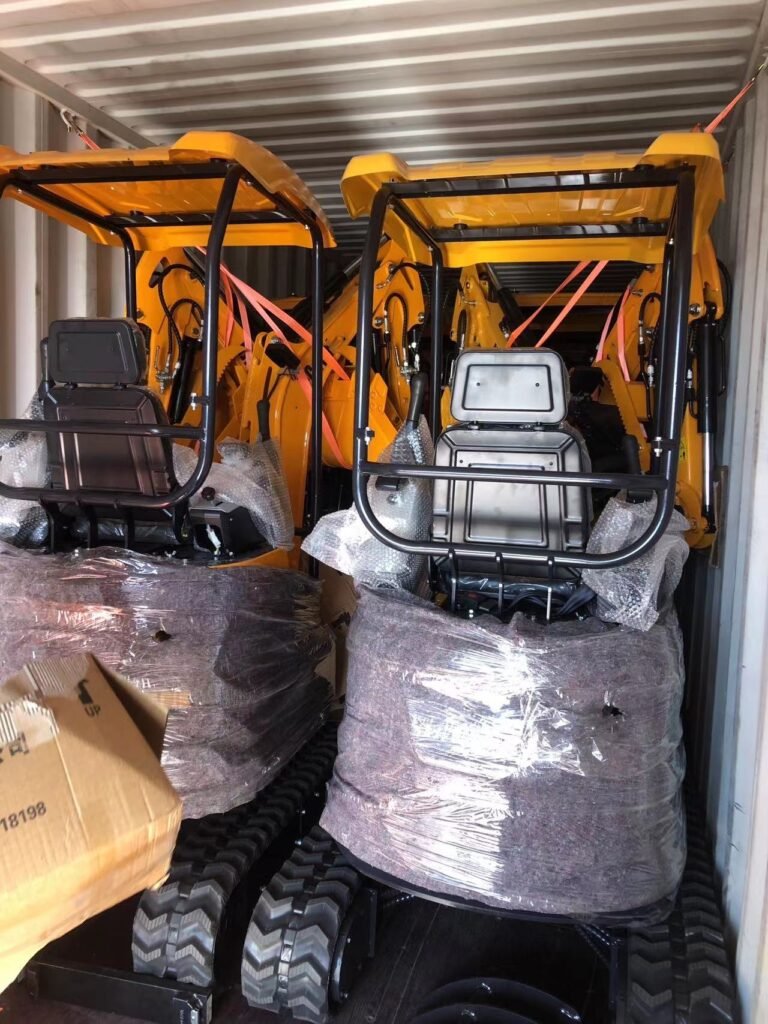
A small excavator shipment typically involves:
- commercial invoice, packing list
- bill of lading (or rail waybill)
- export declaration
- certificate of origin (if needed)
- compliance documents (depends on market)
- insurance (if required)
If any document is wrong, your machine can sit—quietly—while storage fees tick.
This is exactly why many experienced buyers insist on document drafts before shipment, and why certificate fraud is such a hot-button issue in the industry.
Port-to-port time is not door-to-door time
Even if an ocean leg is quoted as “X days,” the shipment still needs:
- trucking to port
- gate-in cutoffs
- export clearance
- destination terminal handling
- customs release
- trucking appointment at destination
This can easily add 7–20+ days depending on the country and season.
Route disruptions can add double-digit days
When carriers reroute around major chokepoints, Asia–Europe voyages can lengthen by ~10 days or more. The IMF noted that diversions around the Cape of Good Hope increased delivery times by 10 days or more during Red Sea disruptions.
More recently, reporting indicates carriers have been cautiously resuming Red Sea/Suez transits as conditions change, which can shorten Asia–Europe lead times compared to detours.
So if a supplier promises “same as last year,” that promise is only as good as the current route reality.
7. Buffers that actually make sense
A buffer is not “add 2 weeks to everything.” A good buffer matches the risk.
Buffer 1: China holiday shutdown buffer
Two periods matter most:
- Spring Festival / Chinese New Year: factories, trucking, ports, and subcontractors slow down
China’s 2026 Spring Festival holiday period is listed as Feb 15–Feb 23, 2026 in an official schedule summary. - National Day / Golden Week (Oct 1–7): another common slowdown window
Practical buffer rule:
- If your RTS date is within ~3 weeks before these holidays, add buffer for upstream delays (components, packaging, trucking).
- If your ETD is during these holidays, expect missed sailings.
Buffer 2: Peak season + equipment constraints
Flat racks, open tops, and special bookings need extra margin because equipment availability becomes a bottleneck.
Buffer 3: Route risk buffer (Europe lanes especially)
If Asia–Europe routing is unstable, add a route buffer aligned with known detour impacts (often in the 10–15 day range during major disruptions).
8. A practical delivery-time calculator you can reuse
Copy this structure into an email, spreadsheet, or PO appendix:
Delivery Time Calculator (template)
A. Production & RTS
- Standard production time: ___ days
- Custom options (color, canopy/cabin, attachments): +___ days
- Factory QC + test + rework allowance: +___ days
- PSI scheduling window: +___ days
A subtotal: ___ days
B. China-side logistics
- Packing/crating: ___ days
- Inland trucking to port/terminal: ___ days
- Export customs clearance: ___ days
- Port cutoffs + waiting: ___ days
B subtotal: ___ days
C. Main transport
- Ocean / Rail / Air transit: ___ days
- Transshipment (if any): +___ days
C subtotal: ___ days
D. Destination-side logistics
- Terminal handling/unloading: ___ days
- Import customs & duty/VAT processing: ___ days
- Inland trucking to final yard: ___ days
D subtotal: ___ days
E. Risk buffer
- Seasonal buffer (holiday/peak): ___ days
- Route buffer (if relevant): ___ days
- Documentation buffer: ___ days
E subtotal: ___ days
✅ Total = A + B + C + D + E = ___ days
This format forces the supplier and forwarder to talk about real steps, not vibes.
9. Example timelines (Germany / North America / Australia)
These examples are illustrative planning models (not guarantees). Real numbers depend on port pairs, carrier schedules, customs workload, and whether the shipment is FCL/flat rack/RoRo.
Example A: China → Germany (B2B dealer shipment)
- Main transport (ocean) is often described in the ~25–35 day range in many lane guides, but end-to-end is longer once handling is included.
- Rail is often discussed around the ~12–20 day range for terminal-to-terminal movement when feasible.
Planning model (ocean, end-to-end):
A 18–30 days + B 7–14 + C 30–45 + D 5–12 + E 7–15
→ ~67–116 days (wide, but realistic for planning)
Planning model (rail where allowed/fit):
A 18–30 + B 6–10 + C 12–20 + D 5–12 + E 5–10
→ ~46–82 days
Example B: China → USA (West vs East matters)
Recent performance indicators show meaningful differences: China→U.S. West Coast around the low 30s in early Jan 2026, while East Coast can be much longer (mid–high 50s).
General shipping guides also commonly use ~30–40 days as an ocean “rule of thumb.”
Planning model (West Coast, door-to-yard):
A 18–30 + B 7–14 + C 25–40 + D 7–14 + E 7–14
→ ~64–112 days
Planning model (East Coast, door-to-yard):
A 18–30 + B 7–14 + C 45–65 + D 7–14 + E 10–20
→ ~87–143 days
Example C: China → Australia
Some lane guidance puts door-to-door sea freight in the ~30–40 day minimum range under regular conditions.
Planning model:
A 18–30 + B 7–12 + C 20–35 + D 5–10 + E 7–14
→ ~57–101 days
10. How to make suppliers commit to dates, not “fast shipping”
This is where smart B2B buyers protect themselves.
1) Put the milestone dates into the contract/PO
Include:
- RTS date definition
- PSI window
- ETD target
- documentation submission deadline (drafts before departure)
2) Ask for proof that production is truly on schedule
Simple, low-drama proof:
- serial number list
- test videos
- packing photos
- date-stamped inspection checklist
3) Make delivery time part of supplier selection
A factory that runs consistent processes tends to give more reliable time control.
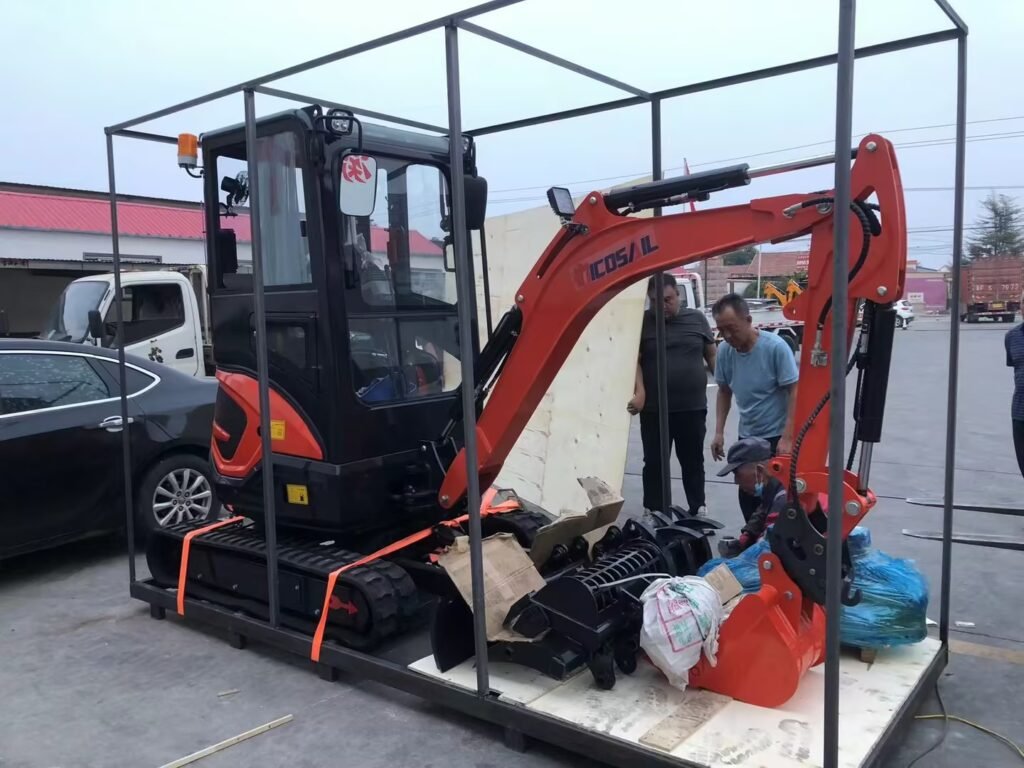
For example, a manufacturer with stable production capacity (like Nicosail, which operates multiple production lines) can typically schedule production slots more predictably than a workshop that depends on subcontracting everything—meaning fewer “sudden” delays when parts or labor get tight.
That doesn’t mean “always fastest.” It means fewer surprises.
4) Choose Incoterms that match your control needs
- If you want control over shipping performance, FOB is often easier (you pick forwarder/carrier).
- If you prefer one point of responsibility, CIF/DAP can be simpler—but demand the milestone breakdown so “included shipping” doesn’t hide delays.
FAQ
1) What’s the #1 mistake when calculating excavator delivery time from China?
Treating port-to-port transit as door-to-door time. Door-to-door includes packing, export, customs, and inland delivery—often adding weeks.
2) Is rail always faster than ocean to Europe?
Often yes on pure transit days, but only when the route is feasible for your cargo and compliance situation. Rail can also face terminal/border constraints. Planning with a milestone model makes the tradeoff clear.
3) How much extra time should be added for Chinese New Year?
If production or booking overlaps the Spring Festival window, add a buffer. China’s 2026 Spring Festival holiday period is listed as Feb 15–23, 2026.
A common practical move is to ship well before the holiday or plan the RTS date after the workforce returns.
4) Why do “flat rack” shipments feel slower?
Because flat racks are limited equipment, often require special handling, and can be harder to book in peak weeks. Fewer available slots = more rolling risk.
5) What documents usually cause delays?
Commercial invoice/packing list mismatches, late BL drafts, missing origin declarations, and market-specific compliance paperwork. The fix is simple: demand document drafts before departure.
6) How can buyers reduce late-shipment risk with a supplier?
Use milestone dates in the PO, require production proof (serial numbers + test video), and enforce a clear RTS definition. Also avoid vague “delivery time” promises without A–E breakdown.
7) Does the Red Sea/Suez situation matter for excavators to Europe?
Yes—route changes can add ~10 days or more during major diversions.
Recent reporting shows some carriers have been cautiously resuming Red Sea/Suez transits, which can shorten lead times compared to Cape detours.
Summary
To calculate delivery times for small excavators from China reliably, stop asking for “how many days?” and start building a milestone-based lead-time model:
- Break delivery into A–E (production, origin, main transport, destination, buffer).
- Choose mode (ocean/rail/air) based on predictability, not just brochure transit days.
- Add smart buffers for holidays, peak season, and route risk.
- Put milestones into the PO so suppliers commit to RTS + ETD, not marketing words.
- Work with a stable manufacturer (such as Nicosail) and insist on proof-based progress updates, so your schedule is driven by facts.