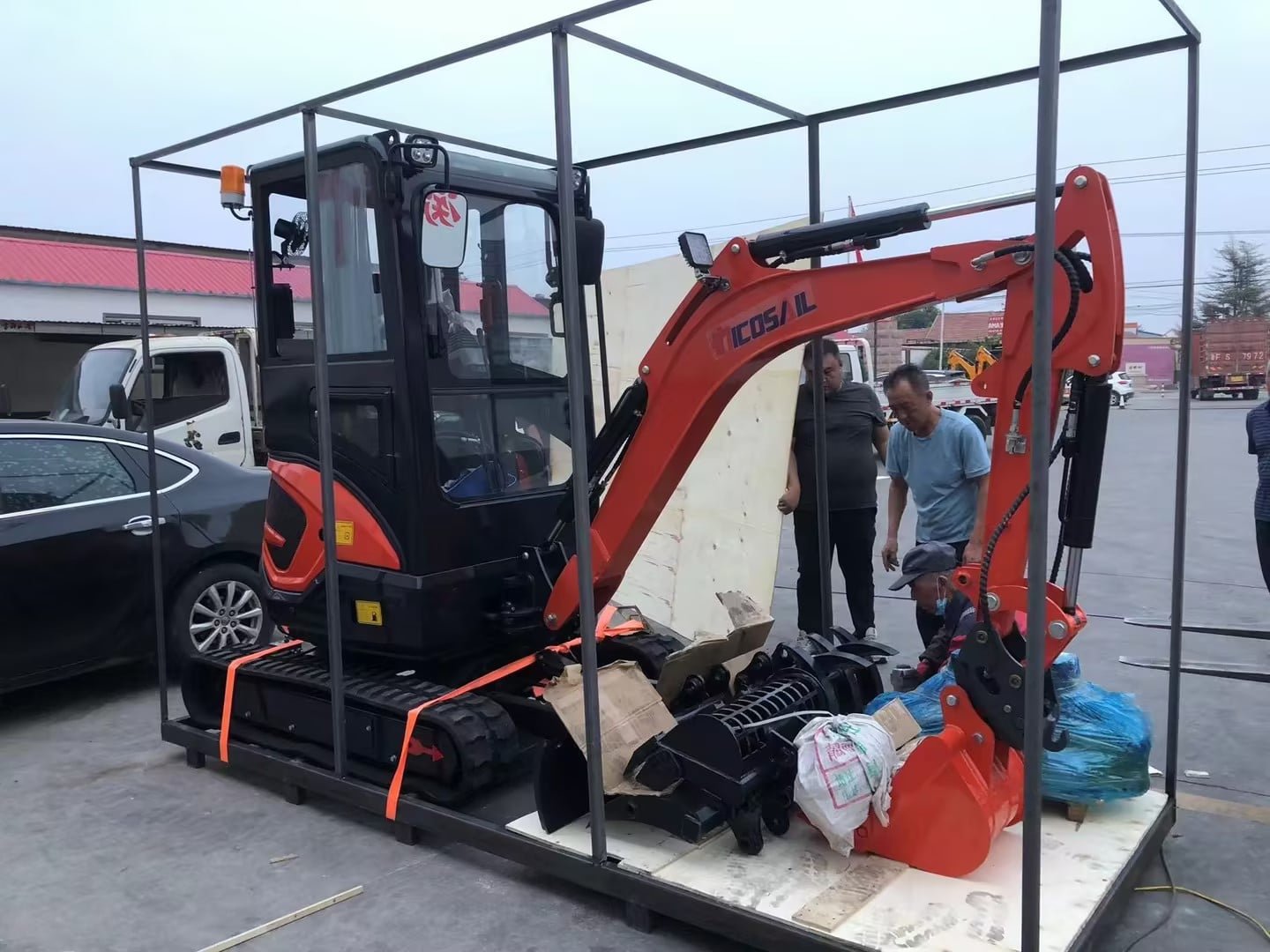
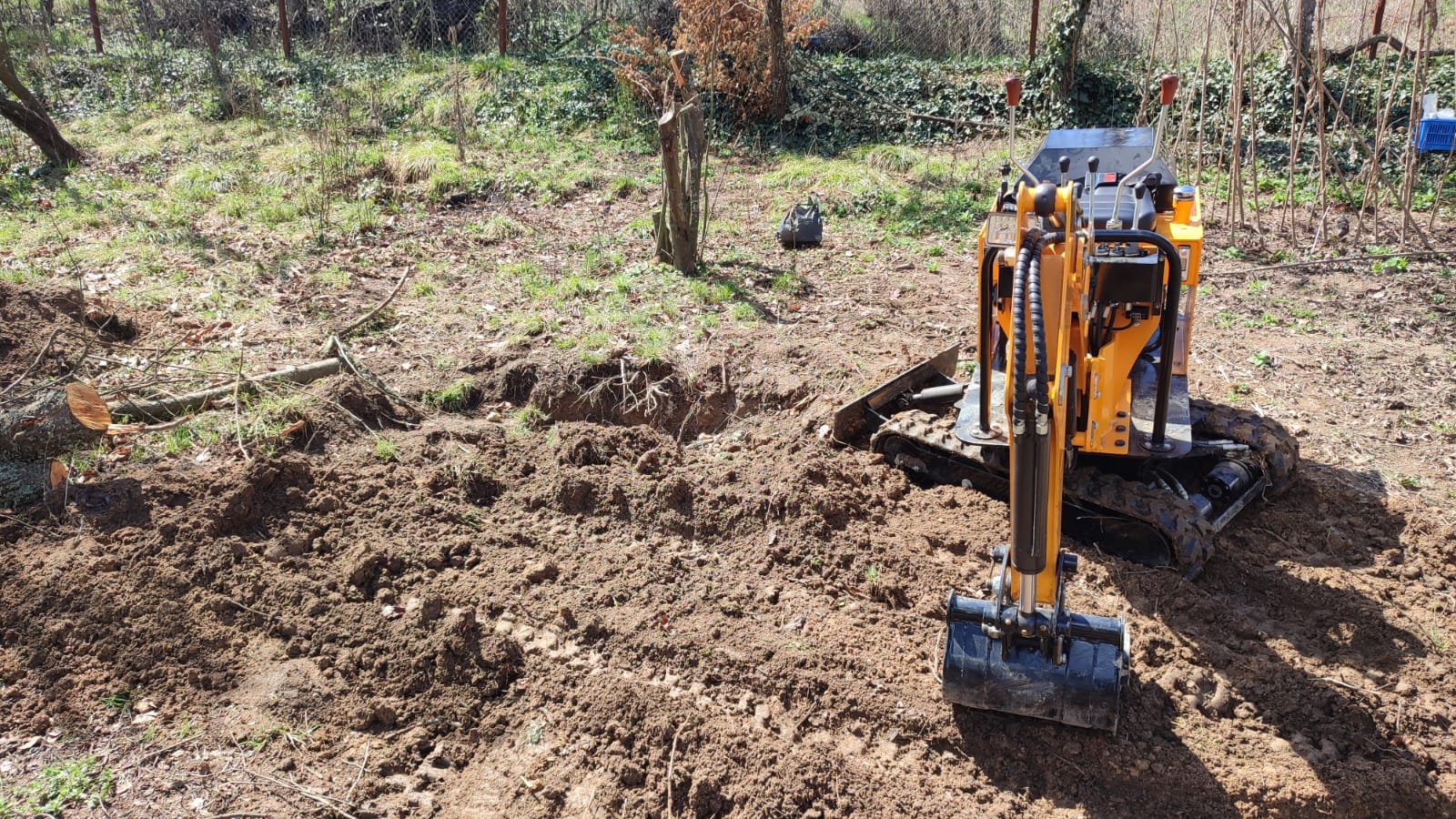
Landscaping looks simple from the outside. Dig a trench, move some soil, plant trees, shape a slope, clean the edge, and the job is done. But anyone who works on real sites knows that landscaping is usually tight, messy, and full of small changes. One part of the day is trenching for drainage. The next part is lifting rocks, shaping a berm, pulling old roots, or backfilling around a fence line. That is exactly why compact excavators have become so important. They are small enough to get into places bigger machines cannot reach, but strong enough to take over the hardest manual work on the site. Manufacturers position these machines around maneuverability, attachment versatility, work in confined spaces, and lower surface disturbance with rubber tracks, which is a very good match for residential and commercial landscaping.
For landscaping crews, efficiency is not just about digging faster. Real efficiency means finishing the job with fewer workers around the trench, fewer hand tools, less rework, less turf damage, less time changing attachments, and less downtime at the end of a busy season. Compact excavators help in all of those areas when the machine is sized correctly and equipped the right way. That is the real point. A compact excavator does not save time just because it is small. It saves time when its size, tail swing, coupler, blade, tracks, hydraulics, and service access all match the kind of work being done every week.
Why compact excavators matter so much in landscaping
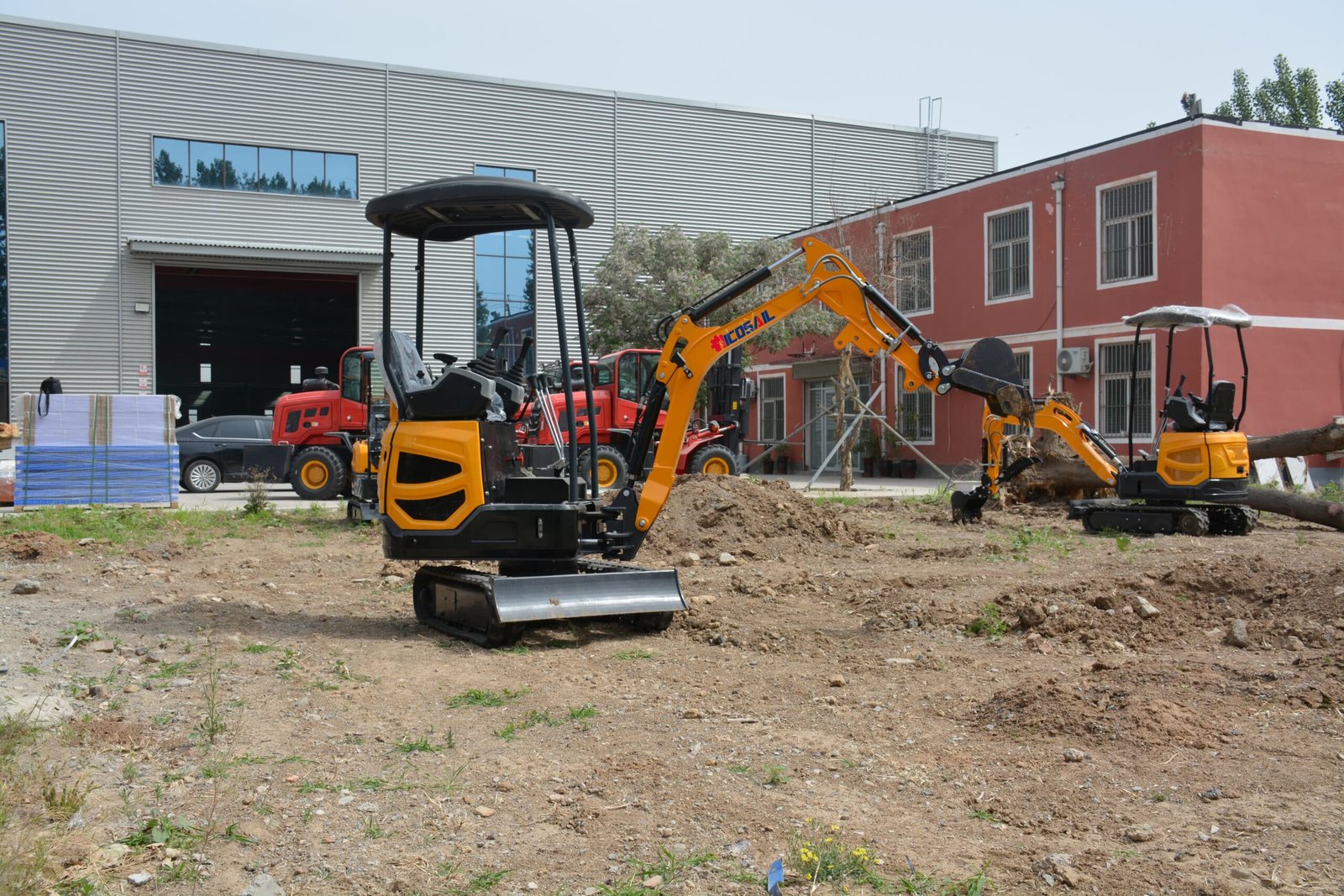
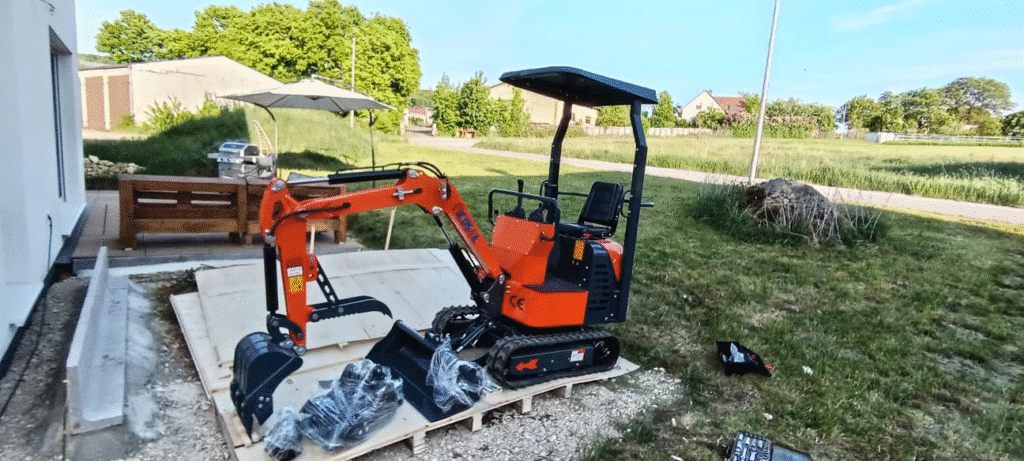
A landscaping site is rarely wide open. There may be fences, garden walls, sheds, sidewalks, retaining walls, parked cars, finished lawns, or existing trees that cannot be touched. In those conditions, a large excavator may have more raw power, but it often loses time because it cannot move cleanly or safely. Compact excavators are built for that kind of environment. Deere highlights zero- and reduced-tail-swing designs for cramped places and tight spaces, while Bobcat’s 1–2 ton class is aimed at backyard access, residential work, and confined jobsites. That is why compact excavators feel almost made for landscaping.
Another big reason is ground care. Landscaping is not only about moving dirt. It is also about protecting finished areas. Rubber tracks help reduce ground disturbance and improve traction on mixed surfaces, which matters a lot when the machine needs to cross a driveway, work near pavers, or travel over a lawn that still has to look good when the job is finished. That one point alone can save a contractor from expensive cleanup and unhappy customers.
Then there is versatility. A compact excavator can trench in the morning, set rocks before lunch, auger holes in the afternoon, and clean a drainage line before leaving the site. That flexibility is one of the biggest reasons landscaping companies like them. Cat, Bobcat, and Deere all emphasize that attachment systems and quick couplers turn compact excavators into multi-tool carriers, which is exactly what a busy landscaping crew needs when site conditions keep changing.
What really makes a compact excavator efficient
1) Tight tail swing is a bigger deal than many buyers expect
On paper, tail swing may look like a small detail. On a landscaping site, it is a daily issue. Zero-tail-swing and reduced-tail-swing machines let the operator work close to walls, fences, and planted areas with less risk of hitting something behind the machine. Deere specifically frames zero- and reduced-tail-swing as a way to maximize maneuverability in cramped places, and Bobcat describes zero-tail-swing as improving rotation and flexibility close to objects. In simple words, tight tail swing means fewer stops, fewer corrections, and less risk of accidental damage.
For backyard projects, this matters even more. A machine may fit through the gate, but if the rear of the upper structure swings too far, the operator still cannot work comfortably. That is why buyers should never focus only on digging depth or engine power. For landscaping, the working envelope matters just as much as the spec sheet. A compact excavator that moves smoothly in a tight circle can often finish faster than a stronger machine that keeps fighting the site.
2) Quick couplers turn one machine into several machines
A landscaping crew loses a surprising amount of time when switching tools the slow way. Manual pin changes, chasing tools around the site, and stopping the job every time the task changes can eat into the day. That is why quick couplers matter so much. Bobcat says its X-Change couplers deliver faster attachment changes than manual pin-on systems, and Deere describes its quick-coupler setup as allowing faster changeover with minimal downtime. Cat says quick couplers help crews work more efficiently and get more jobs done with limited machines.
This is especially important in landscaping because the work changes constantly. A narrow trench bucket may be needed for irrigation, then a ditch-cleaning bucket for shaping, then a thumb for rocks or root balls, then an auger for fence posts or tree planting. A fast coupler system keeps the operator inside the flow of the job instead of turning every change into a small delay. Over a week, that becomes real money.
3) The blade is not just for parking or backfilling
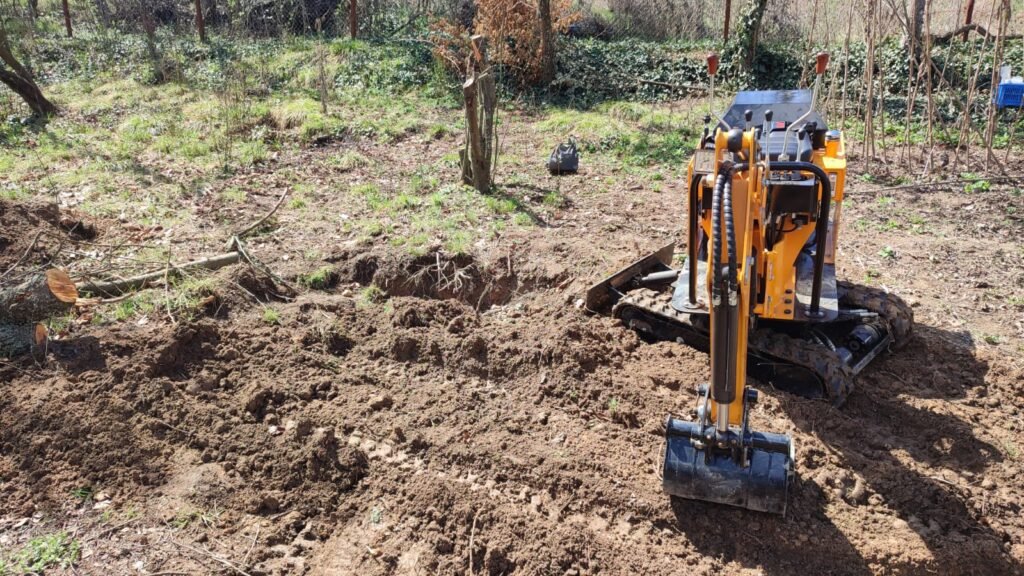
Many new buyers underestimate the blade. In real landscaping work, the blade is doing much more than keeping the machine stable. Bobcat explains that the backfill blade is used for grading, leveling, backfilling, and dozing, and that an angle blade helps direct soil left or right for faster grading. Deere and Kubota also highlight blades and grading features as part of versatility and efficient operation. For landscaping jobs where the finish matters, the blade can save a lot of shovel work.
This becomes obvious on drainage jobs, path preparation, and final contouring. A crew that uses the blade well can clean a trench edge, push spoil back cleanly, and leave the site closer to finish grade before anyone touches a rake. That does not replace a dedicated grading machine on larger projects, but on many residential and light commercial jobs, it removes a big chunk of hand labor.
4) Auto-idle and work modes quietly cut running costs
Fuel savings do not look exciting, but they are part of efficiency. Deere notes that auto-idle reduces engine speed when hydraulics are not in use, while auto shutdown conserves fuel further. On landscaping jobs, machines often pause while workers check layout, set pipe, place geotextile, or reposition materials. A machine that automatically drops engine speed during those pauses wastes less fuel and runs quieter. That is useful in residential neighborhoods and on long seasonal projects.
It also helps machine wear. The less a machine spends idling hard for no reason, the better. Buyers often focus on the purchase price, but the daily cost of fuel and unnecessary engine hours can quietly eat profit over time. A compact excavator with simple fuel-saving features usually makes more sense for landscaping than a machine that is oversized and spends half the day waiting.
5) Operator comfort is not a luxury item
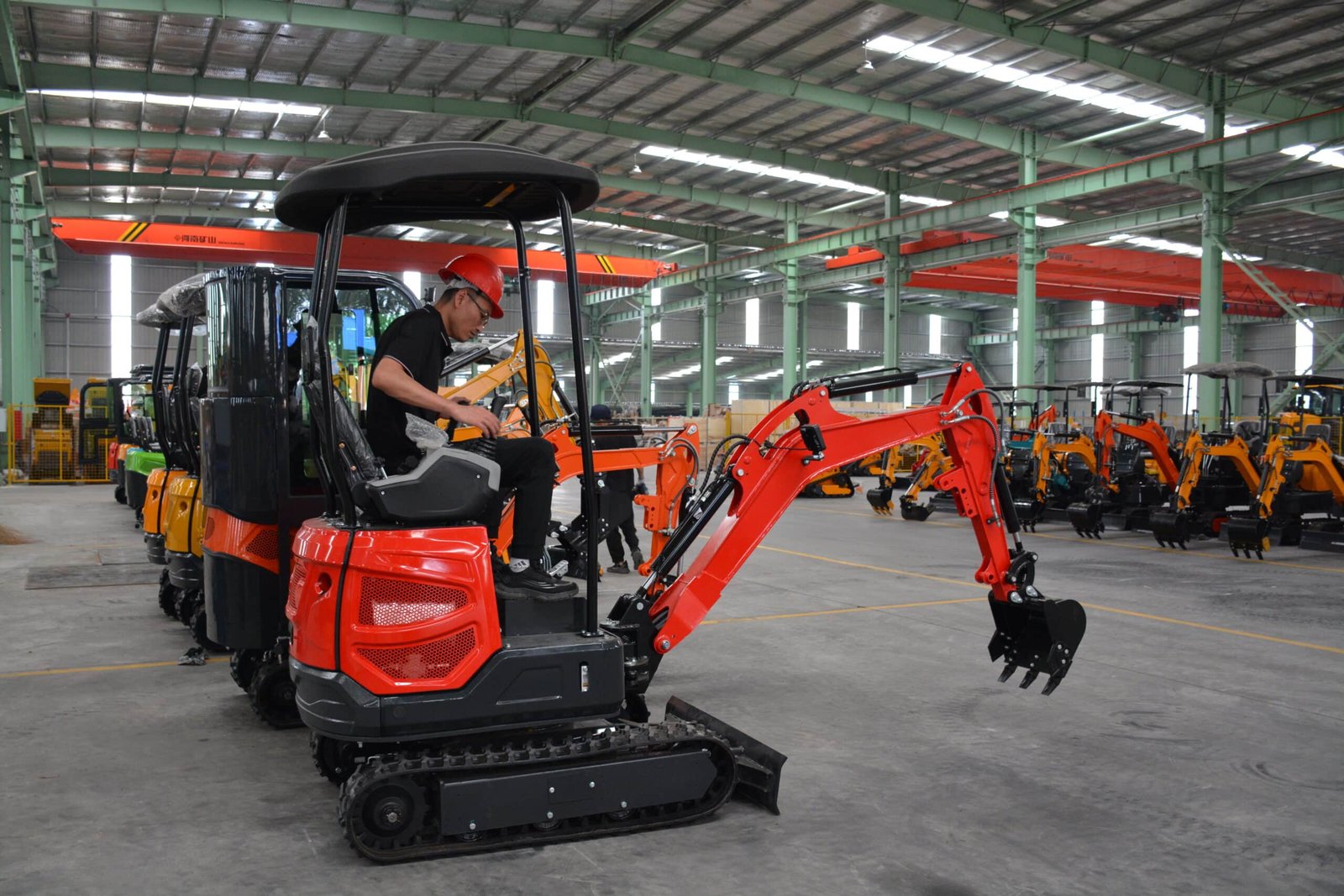
There is a direct link between comfort and production. Bobcat says comfort features reduce operator fatigue and are essential to productivity. Spacious cabs, better visibility, improved seat design, and more legroom all help the operator stay sharp. That may sound basic, but landscaping work involves constant fine control around edges, roots, pipes, stone, and finished surfaces. A tired operator gets slower and rougher. That leads to mistakes.
For buyers, this is an easy place to make a smart decision. A machine that is comfortable for eight hours is usually a more productive machine than one that only looks good in a brochure. That is especially true for rental fleets, dealer customers, and contractors who have multiple operators using the same unit through the season.
The attachments that save the most time
A compact excavator becomes a serious landscaping machine when the attachment package is chosen well. The most useful setup for many crews is not complicated.
A trench bucket is still the daily workhorse for irrigation lines, cable runs, and drainage. A ditch-cleaning or grading bucket makes shaping, cleaning, and slope finishing much faster. A hydraulic thumb is extremely useful for grabbing rocks, broken concrete, stumps, roots, timber, and awkward landscape materials. An auger saves huge amounts of labor when planting rows of trees or setting posts. Cat specifically calls out augers for planting trees, shrubs, and fencing, and also lists grapples, thumbs, tilt tools, buckets, and other landscaping-ready attachments for mini excavators.
For contractors who do more finish work, grading blade and tilt-style solutions deserve attention. Bobcat promotes grading blades and Hydra-Tilt style solutions for slopes, drainage ditches, contouring, and terrain finishing. That combination is valuable because it cuts down on repositioning the machine every few minutes. Less repositioning means quicker cycle times and better-looking results.
A common mistake is buying the machine first and thinking about attachments later. That usually leads to compromise. A better approach is to look at the top three jobs the machine will do every month, then choose the auxiliary hydraulic setup, coupler, bucket mix, and thumb or auger package around those jobs. Buyers looking at factory-direct suppliers often get better value when they order the machine and attachment package together instead of adding tools one by one later.
How to choose the right machine size
For landscaping, machine size should be matched to access, not ego.
1–2 ton class: best for backyards, narrow gates, and light residential work
This class is ideal when the machine must pass through tight entryways, work inside fenced yards, or handle lighter trenching and planting work. Bobcat markets this size around confined spaces and backyard access, and Deere’s 17 P-Tier uses a variable-width undercarriage and foldable blade specifically to get through narrow pathways. For garden jobs, irrigation, small drainage lines, and homeowners with limited access, this class often makes the most sense.
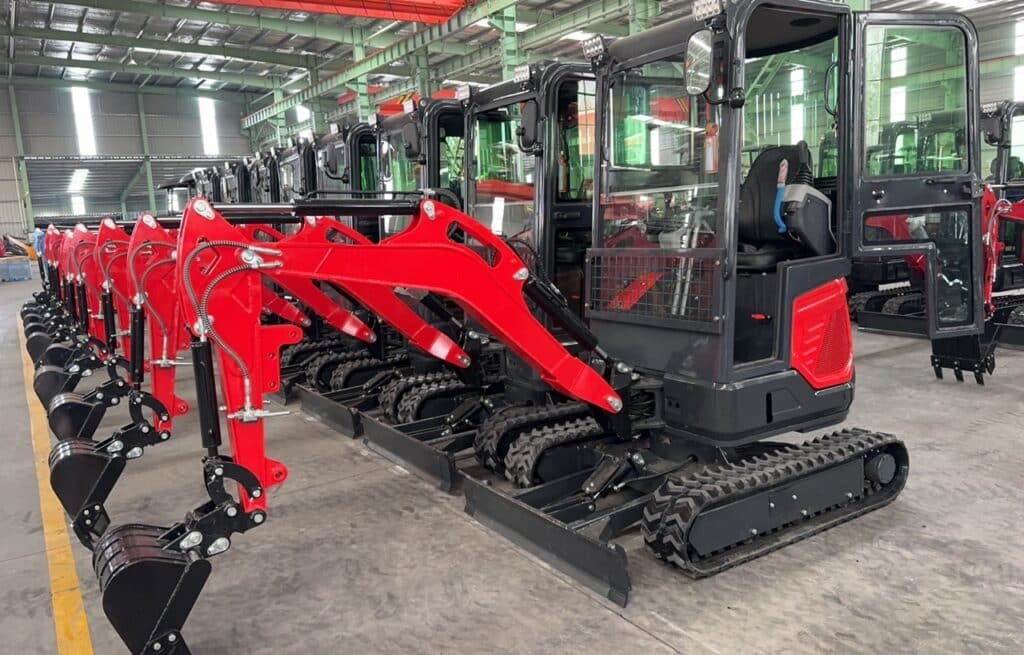
3–4 ton class: the sweet spot for many landscaping contractors
This is often the most balanced class. It has enough digging force and lift for regular commercial landscaping, rock placement, moderate trench depth, and general site shaping, but it is still compact enough for most urban and residential work. This is the range many buyers end up happiest with because it can do much more than a tiny machine without becoming difficult to transport or too aggressive for finished properties. Deere, Kubota, and Bobcat all frame their compact ranges as a balance of maneuverability, power, and versatility in this size band.
5–6 ton class: for larger hardscaping and heavier commercial work
When the job includes bigger lifts, deeper digging, more hydraulic demand, and larger-scale landscaping, the 5–6 ton class starts to make sense. Bobcat explicitly describes this class as suitable for large-scale landscaping, with greater digging depth, reach, and lifting capacity. This is a strong choice for contractors handling retaining-wall prep, sewer runs, pool excavation support work, and larger commercial projects. The trade-off is that access becomes more limited, transport gets heavier, and the machine can be too much for delicate residential yards.
The simple rule is this: buy the smallest machine that can comfortably do 80 percent of the real jobs. That usually gives the best efficiency in landscaping. An oversized unit may look stronger, but if it cannot reach the work area easily, it is not efficient.
Practical ways to get more work done every day
The machine matters, but daily habits matter too.
The most efficient crews plan spoil placement before the first bucket hits the ground. They think about swing direction, truck position, pipe layout, stone stacks, and where the next attachment will sit. That sounds basic, but it changes the rhythm of the whole job. A compact excavator is efficient because it cycles quickly. Poor site setup kills that advantage.
Daily checks are another big part of productivity. Cat and Bobcat both stress daily inspection of tracks, undercarriage, fluids, hoses, cylinders, coupler systems, and related wear points. Bobcat and Kubota also emphasize easy service access because faster service means less downtime and better odds that routine maintenance actually gets done. In landscaping, where machines run through mud, roots, gravel, wet soil, and debris, skipping those checks is asking for trouble.
Track care is especially important. Rubber tracks support traction, stability, and flexibility across different surfaces, but they still need correct tension and regular inspection. Debris packed into the undercarriage, loose track tension, or unnoticed damage can turn a productive week into downtime. For landscaping contractors, that is one of the easiest avoidable losses.
Where money is usually lost on landscaping jobs
Most profit loss in landscaping does not come from one big failure. It comes from small inefficiencies that pile up.
One is rework. A machine with poor control, the wrong bucket, or the wrong size may finish the rough excavation fast but leave too much cleanup. Another is property damage. Too much tail swing, poor visibility, or the wrong track choice can mean damaged fences, hardscape edges, irrigation lines, or finished turf. Another is downtime from neglected service items. Another is overbuying machine size and paying for transport, fuel, and machine weight that the site never actually needed.
There is also safety. Excavation work is not harmless just because the machine is compact. OSHA and NIOSH both warn that excavation and trenching are among the most hazardous construction operations. OSHA requires protective systems for trenches 5 feet deep or greater unless the excavation is entirely in stable rock, and means of egress such as a ladder or ramp must be available in trench excavations 4 feet or more in depth so workers do not have to travel more than 25 feet laterally. Landscaping contractors doing drainage, utility, or retaining work need to treat that seriously. One cubic yard of soil can weigh as much as a car.
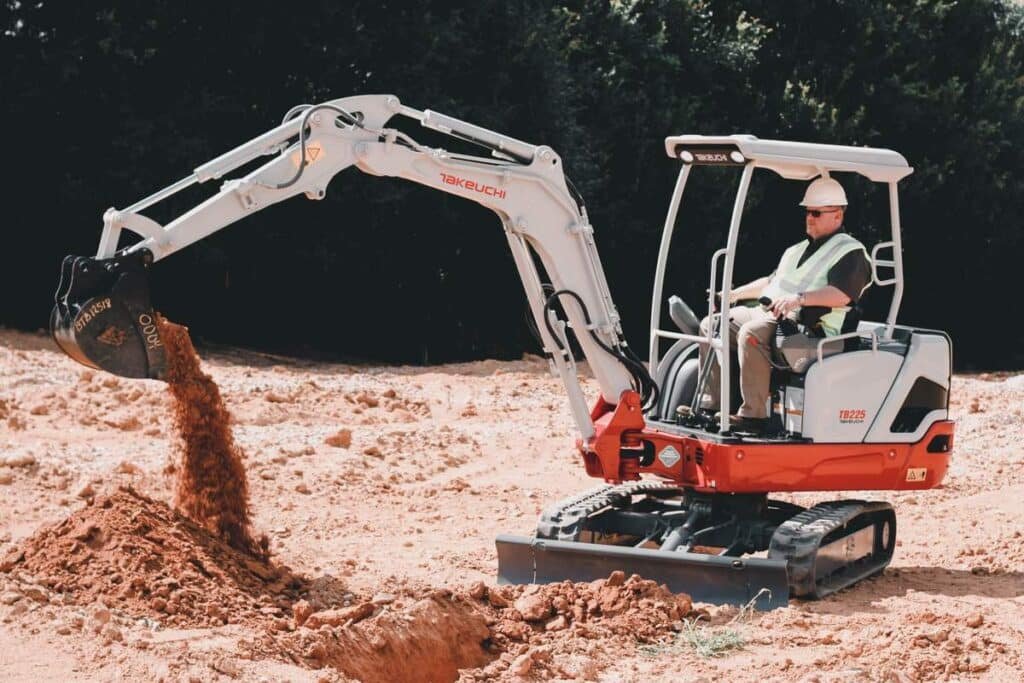
What buyers should check before placing an order
Before buying a compact excavator for landscaping, buyers should slow down and check the basics.
Start with access width. If the machine cannot get through the gate or work comfortably beside a wall, the spec sheet will not save the job. Then check tail swing, auxiliary hydraulics, coupler type, bucket package, and whether a thumb or auger is already planned. After that, look at the blade setup, track type, and ease of daily service access. These are the things that affect productivity every single week, not just on delivery day.
Parts support and maintenance design matter too. Manufacturers consistently frame easy access service points, routine inspection, and scheduled maintenance as essential to uptime. For dealers, rental companies, and importers, this point is often more important than chasing the cheapest unit. A cheaper machine that sits waiting for service parts is not cheap anymore.
Why Nicosail is worth considering
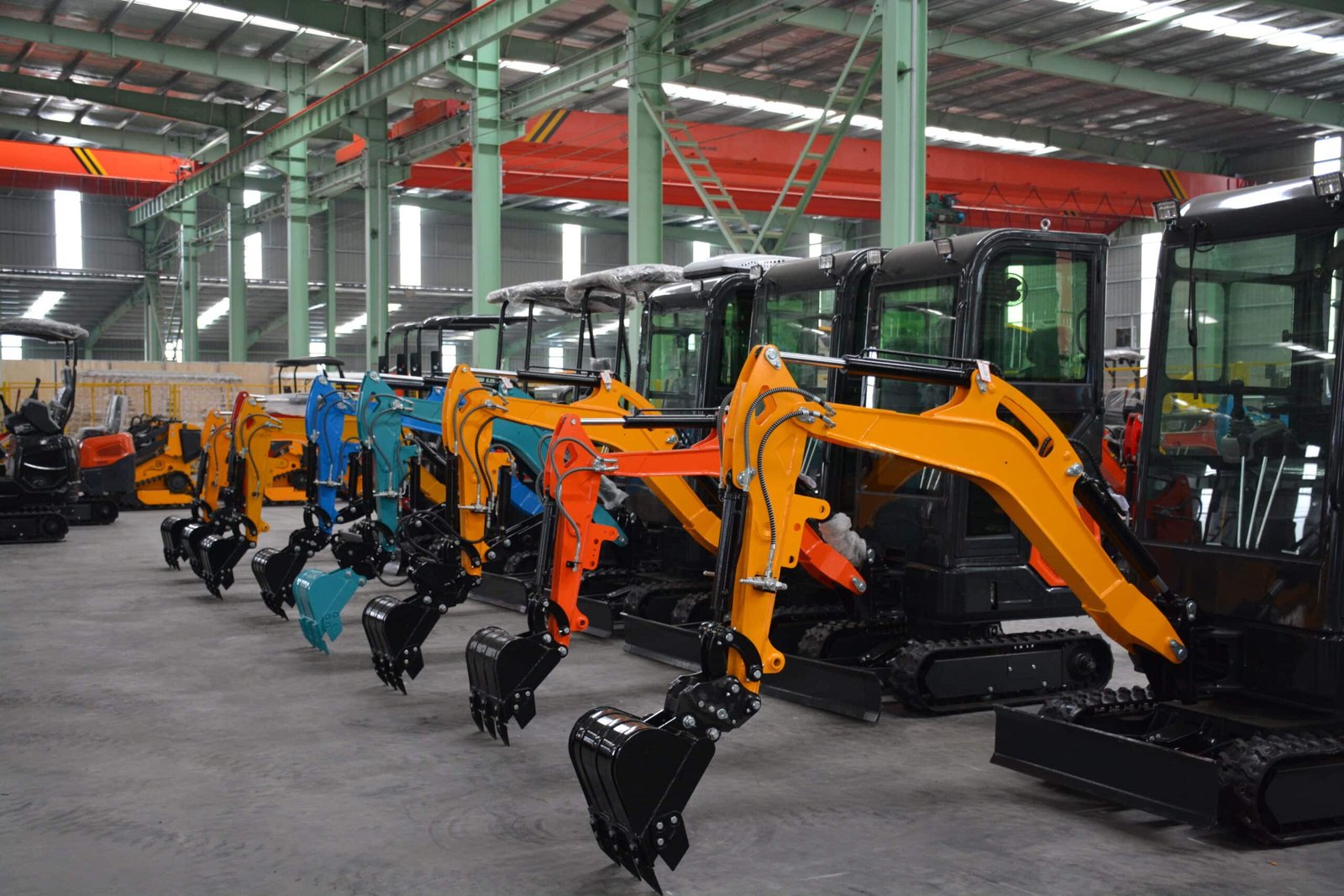
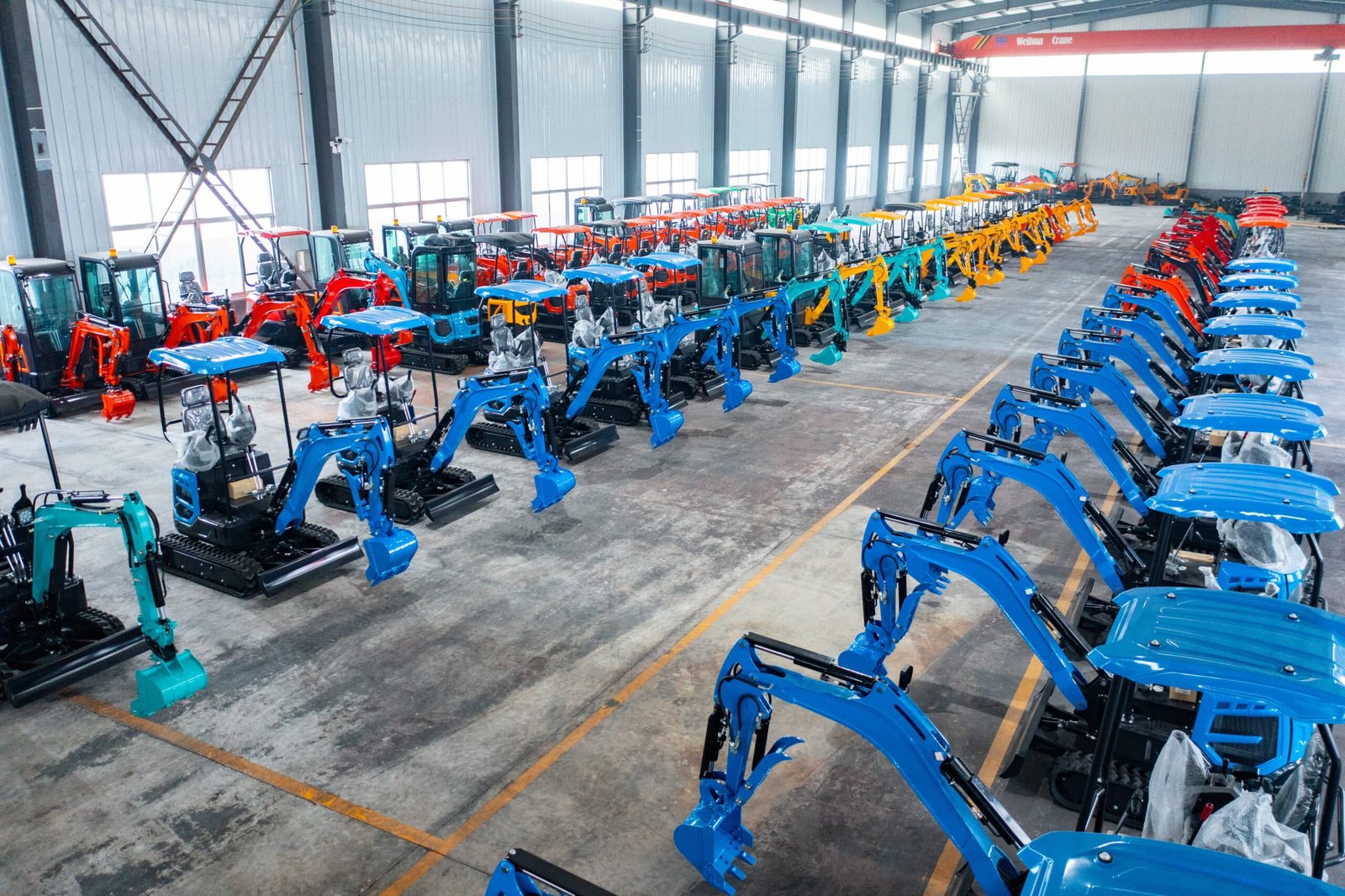
For buyers comparing factory-direct options, Nicosail is worth a serious look because the value is not only in the machine itself. The bigger advantage is usually the combination: compact size options, practical export thinking, attachment matching, and the ability to customize appearance or configuration for different markets. For dealers and importers, that flexibility matters. For end users, what matters more is getting a machine that is simple to operate, easy to maintain, and equipped for real work instead of flashy extras.
That is the right way to evaluate Nicosail too. Not as a brand to buy just because it is lower cost, and not as a brand to reject just because it is factory-direct from China. The better question is whether the machine is correctly sized for the target jobs, whether the attachment package is practical, whether support and parts planning are clear, and whether the supplier understands the needs of Europe, North America, or Australia. When those boxes are checked, Nicosail can be a sensible option for landscaping contractors, dealers, rental fleets, and importers who want solid value without making the article of faith mistake that “bigger” or “more famous” always means “better.”
FAQ
Are compact excavators really necessary for landscaping?
For many jobs, yes. They reduce hand labor, speed up trenching and backfilling, protect access in tight spaces, and handle several tasks with one machine when equipped with the right attachments.
What is the best compact excavator size for landscaping?
For small residential work, 1–2 ton machines are often best. For mixed landscaping and hardscaping, 3–4 ton machines are usually the sweet spot. For larger commercial landscaping and heavier excavation, 5–6 ton machines are often more suitable.
Which attachments are most useful?
A trench bucket, grading bucket, hydraulic thumb, and auger are usually the most useful starting package. Contractors doing more finish work may also benefit from grading blade or tilt solutions.
Do rubber tracks really make a difference?
Yes. They help with traction on mixed terrain and reduce ground disturbance, which is especially valuable on finished or sensitive landscaping sites.
Is zero-tail-swing worth paying for?
In landscaping, very often yes. It improves maneuverability and lowers the chance of striking fences, walls, vehicles, or planted areas when working in tight spaces.
How important is daily maintenance?
Very important. Daily checks on tracks, undercarriage, fluids, hoses, and couplers help prevent downtime and keep performance stable during busy seasons.
Are compact excavators safe for trenching work?
They can be, but the machine does not replace trench safety rules. OSHA requires protective systems in many trenching situations and requires safe access or egress in trenches 4 feet or deeper.
Final thoughts
Compact excavators are essential for landscaping because they solve the real problems that slow jobs down: tight access, changing tasks, hand labor, cleanup, and property damage risk. The biggest efficiency gains come from choosing the right size, using a quick coupler, selecting the right attachments, protecting finished ground with rubber tracks, and keeping the machine easy to service and ready every morning.
For buyers, dealers, and contractors, the smartest purchase is not the one with the biggest engine or the most aggressive brochure. It is the machine that fits the gate, fits the crew, fits the attachment plan, and keeps working through the season. In landscaping, that is where efficiency really comes from. And when evaluating factory-direct brands such as Nicosail, that is the standard worth using.